Mussels for Babies
Baby Food Guide from 6 Months
Puree
6+
Months
BLW
6+
Months
Choking Hazard
Moderate
Allergen
Yes
Key Nutrients
Iron • Vitamin B12 • Protein
Can Babies Eat Mussels?
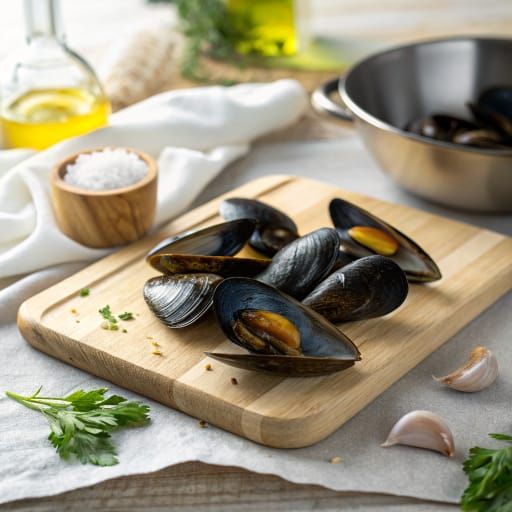
Mussels are a small, dark-shelled shellfish that punch well above their size nutritionally. They're one of the richest natural sources of iron and vitamin B12 you can put on a baby's plate, the kind of iron the body absorbs far more easily than what's found in plant foods, alongside complete protein for growth.
Because mussels are shellfish, one of the major food allergens, they're usually introduced after a few other allergenic foods are already tolerated, and they must always be cooked thoroughly, never raw. The meat is naturally a bit chewy, so mincing it finely into a puree or mash is what makes it manageable for a baby.
A lot of parents are surprised how easily mussels fit into weeknight cooking. A pot steamed in a little broth gives you a grown-up portion and a soft, flavorful protein for baby at the same time, no separate meal required, and they're relatively inexpensive for how nutrient-dense they are.
Mussels Baby Food: How to Prepare It
Puree from 6+ Months
Finely mince thoroughly cooked (or low-sodium canned) mussel meat and stir it into a soft, spoonable base such as mashed potato, a smooth vegetable puree, or porridge. Serve slightly warm and never offer mussels raw.
BLW from 6+ Months
Mince fully cooked or low-sodium canned mussels very small and blend them through mashed potato, a thick vegetable puree, or yogurt so baby can practice self-feeding with a pre-loaded spoon or fingers.
BLW from 9+ Months
Mince or cut fully cooked mussels into thin slivers. These smaller pieces are easier to manage and give baby practice with an emerging pincer grasp.
BLW from 12+ Months
Offer cooked mussel meat chopped into small pieces or thin ribbons stirred through rice, pasta, or soft vegetables. Continue avoiding whole mussels until your toddler chews confidently with their molars, usually closer to two years old.
Nutritional Benefits
Mussels are one of the most nutrient-dense foods available, delivering exceptional amounts of easily absorbed iron and vitamin B12 alongside complete protein, zinc, and omega-3 fats. Few whole foods pack this much nutrition into such a small serving.
Key Nutrients
Iron
Delivers easily absorbed heme iron to help prevent anemia as baby's stores decline.
Vitamin B12
Supports healthy nervous system development and red blood cell production.
Protein
Provides all the essential amino acids babies need for rapid growth.
Zinc
Strengthens immune function and helps wounds heal.
Omega-3 Fatty Acids
Support developing brain and eye tissue.
Iodine
Supports healthy thyroid function, which regulates growth and metabolism.
Allergen & Choking Information
Common Allergen
Mussels are shellfish, one of the nine major food allergens. Introduce a small first taste after baby has tolerated other allergens, and watch closely for reactions. Always cook thoroughly and mince or chop finely to reduce choking risk from the chewy texture.
Frequently Asked Questions
When can babies eat Mussels?
Around 6 months (thoroughly cooked and finely minced)
How do I prepare Mussels puree for my baby?
Finely mince thoroughly cooked (or low-sodium canned) mussel meat and stir it into a soft, spoonable base such as mashed potato, a smooth vegetable puree, or porridge. Serve slightly warm and never offer mussels raw.
What are the nutritional benefits of Mussels?
Mussels are one of the most nutrient-dense foods available, delivering exceptional amounts of easily absorbed iron and vitamin B12 alongside complete protein, zinc, and omega-3 fats. Few whole foods pack this much nutrition into such a small serving.
Sources & Related Resources
Get Personalized Guidance for Every Feeding Stage
Download the Grubsy app to track meals, get tailored recommendations, and explore foods like Mussels plus hundreds more, all in one place.
Disclaimer: This information is for educational purposes only and does not replace professional medical advice.