Mint for Babies
Baby Food Guide from 6 Months
Puree
6+
Months
BLW
6+
Months
Choking Hazard
Low (used finely chopped in small amounts)
Allergen
No
Key Nutrients
Vitamin A • Vitamin C • Iron
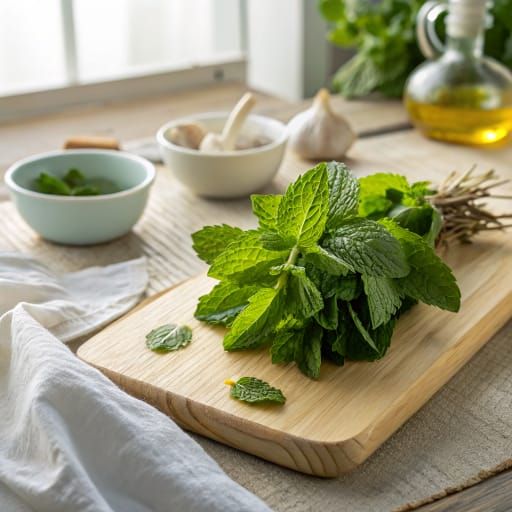
Can Babies Eat Mint?
Mint is a fragrant, fast-growing herb that babies usually meet as a flavor accent from around 6 months, not as a food eaten on its own. In the small amounts used for cooking it won't move the needle on nutrition much, but it carries trace vitamin A, vitamin C, and iron, plus aromatic compounds like menthol that are linked to mild digestive comfort.
Its real value at this stage is exposure: getting your baby used to a fresh, slightly assertive flavor that will keep showing up in family meals for years to come. Mint isn't a common allergen and, used finely minced, carries very little choking risk, though a whole leaf is best saved for when your baby bites and tears food confidently.
Stir minced fresh mint into purees, yogurt, or sauces for a bright note, or work it into soft dishes like meatballs. It pairs especially well with fruit, yogurt-based dips, and lamb or peas, and keeps best stored upright in a glass of water in the fridge, much like cut flowers.
Mint Baby Food: How to Prepare It
Puree from 6+ Months
Finely mince or blend fresh mint and stir a small amount into vegetable or fruit purees, mashes, or smooth sauces for a bright, fresh note.
BLW from 6+ Months
Mix a small amount of finely minced fresh mint into thick, spoonable dishes, or work it into tender ground-meat patties. Blending mint into a smooth sauce is another easy way to introduce the flavor.
BLW from 9+ Months
Cut the leaves into tiny bits or slice them into narrow strips and stir them through meals. A little gagging or coughing can happen as chewing skills mature, so offer sips of water; extra spitting is also normal at this stage.
BLW from 12+ Months
Continue stirring chopped mint into meals, dressings, and sauces. From 24 months, once your toddler can bite and tear larger pieces, you can also offer a whole fresh mint leaf to try on its own.
Nutritional Benefits
Mint contributes only trace nutrition in the small amounts typically used for flavoring, but its aromatic plant compounds offer mild digestive comfort, and introducing it early helps build a baby's familiarity with more complex herbal flavors.
Key Nutrients
Vitamin A
Supports healthy vision and skin, even in the small amounts used for flavoring.
Vitamin C
Contributes modestly to immune support.
Iron
Adds a small trace amount to a baby's overall intake.
Antioxidants (Rosmarinic Acid)
Plant compounds that help protect cells from damage.
Menthol
Gives mint its cooling aroma and is linked to mild digestive comfort.
Allergen & Choking Information
Not a Common Allergen
Mint is not a common allergen. Used finely minced or blended in small amounts, it poses very little choking risk. Hold off on offering a whole, unchopped mint leaf until a baby can reliably bite and tear food, generally after 24 months.
Frequently Asked Questions
When can babies eat Mint?
Around 6 months (finely minced and stirred into purees)
How do I prepare Mint puree for my baby?
Finely mince or blend fresh mint and stir a small amount into vegetable or fruit purees, mashes, or smooth sauces for a bright, fresh note.
What are the nutritional benefits of Mint?
Mint contributes only trace nutrition in the small amounts typically used for flavoring, but its aromatic plant compounds offer mild digestive comfort, and introducing it early helps build a baby's familiarity with more complex herbal flavors.
Sources & Related Resources
Get Personalized Guidance for Every Feeding Stage
Download the Grubsy app to track meals, get tailored recommendations, and explore foods like Mint plus hundreds more, all in one place.
Disclaimer: This information is for educational purposes only and does not replace professional medical advice.