Millet for Babies
Baby Food Guide from 6 Months
Puree
6+
Months
BLW
6+
Months
Choking Hazard
Moderate (loose grains); Low (bound into sticky foods)
Allergen
No
Key Nutrients
Fiber • Iron • Antioxidants
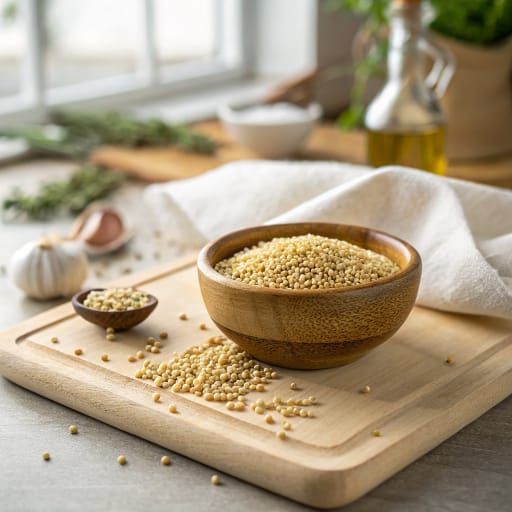
Can Babies Eat Millet?
Millet is a small, round grain that's been a staple across parts of Africa and Asia for thousands of years, long before it showed up in Western baby food aisles. It's naturally gluten-free, unlike wheat, oats, or barley, and cooks up mild and slightly nutty with a fluffy texture that works as easily in a smooth porridge as in more textured finger foods.
Nutritionally, millet punches above its weight. It's a genuinely good source of iron, right as your baby's own stores start dipping around 6 months, plus fiber and antioxidants, and it's not a common allergen, so it's an easy grain to rotate in for variety.
The one thing worth knowing before serving: loose, dry grains scatter easily in a baby's mouth, so cook millet soft and bind it into something sticky, like mashed vegetables or yogurt, rather than serving the grains loose. It also batch-cooks and freezes well, a practical staple to keep on hand.
Millet Baby Food: How to Prepare It
Puree from 6+ Months
Cook millet until very soft, then mash with a fork or blend with extra water, broth, breast milk, or formula into a smooth porridge. Mix with mashed vegetables or fruit if desired.
BLW from 6+ Months
Fold cooked millet into sticky foods like mashed vegetables, yogurt, or porridge so the grains hold together instead of scattering in the mouth.
BLW from 9+ Months
Bake millet into fritters, pancakes, or patties for grasping, or flatten cooked grains with a fork so baby can pick them up and self-feed.
BLW from 12+ Months
Serve millet with sauces, stews, and stir-fries, and offer a spoon or fork so your toddler can practice using utensils.
Nutritional Benefits
Millet is a naturally gluten-free grain that offers fiber, iron, and antioxidants in a mild, easy-to-digest porridge, making it a nutritious alternative to more familiar first grains.
Key Nutrients
Fiber
Supports healthy digestion.
Iron
Helps guard against the natural dip in iron stores around 6 months.
Antioxidants
Help protect developing cells from damage.
Magnesium
Supports muscle and bone development.
B Vitamins
Support energy metabolism and nervous system function.
Allergen & Choking Information
Not a Common Allergen
Millet is not a common allergen and is naturally gluten-free. Loose, dry grains can scatter in a baby's mouth, so bind cooked millet into sticky foods like mashed vegetables or yogurt until chewing skills are well established.
Frequently Asked Questions
When can babies eat Millet?
Around 6 months (cooked into a smooth porridge)
How do I prepare Millet puree for my baby?
Cook millet until very soft, then mash with a fork or blend with extra water, broth, breast milk, or formula into a smooth porridge. Mix with mashed vegetables or fruit if desired.
What are the nutritional benefits of Millet?
Millet is a naturally gluten-free grain that offers fiber, iron, and antioxidants in a mild, easy-to-digest porridge, making it a nutritious alternative to more familiar first grains.
Sources & Related Resources
Get Personalized Guidance for Every Feeding Stage
Download the Grubsy app to track meals, get tailored recommendations, and explore foods like Millet plus hundreds more, all in one place.
Disclaimer: This information is for educational purposes only and does not replace professional medical advice.