Mango for Babies
Baby Food Guide from 6 Months
Puree
6+
Months
BLW
6+
Months
Choking Hazard
Low
Allergen
No
Key Nutrients
Vitamin A • Vitamin C • Fiber
Can Babies Eat Mango?
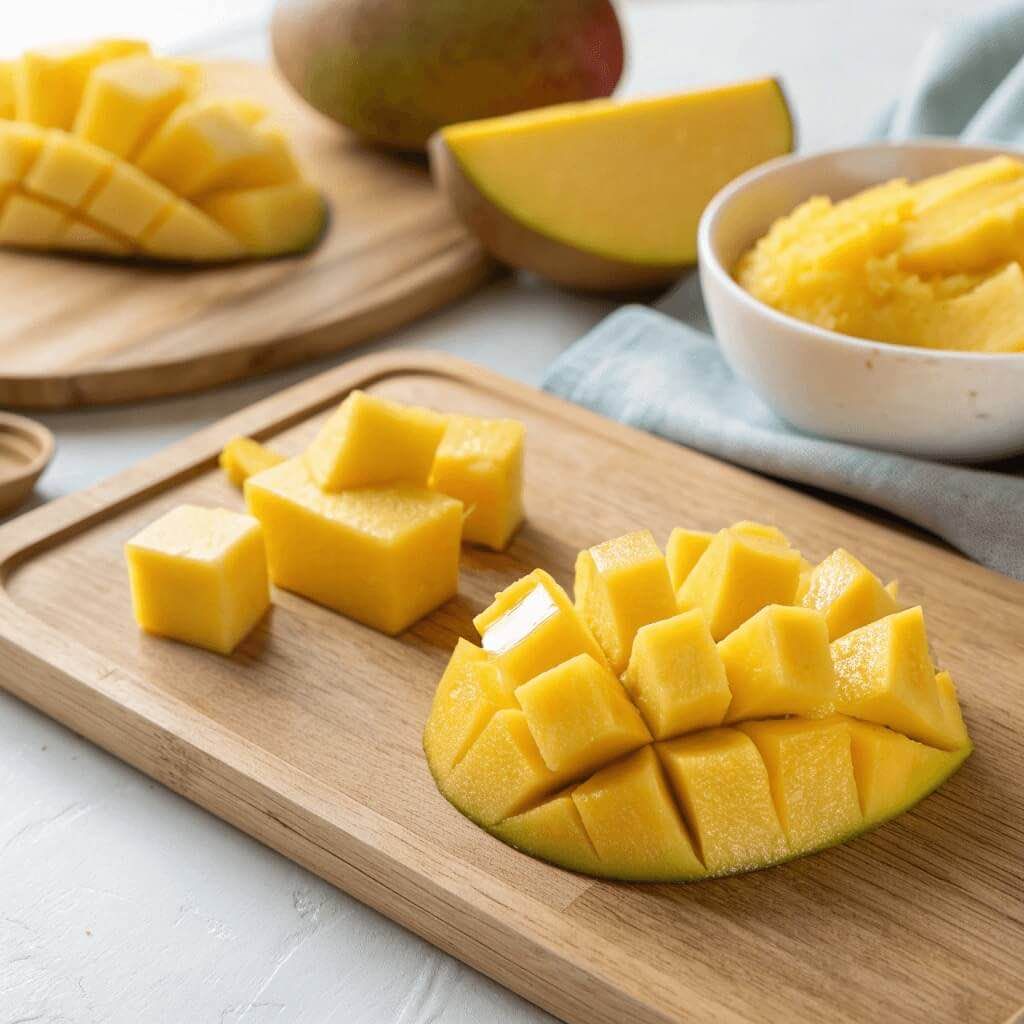
Mango is a naturally sweet tropical fruit sometimes called the king of fruits, and nutritionally it earns the title: a single serving delivers a big dose of vitamin A from beta-carotene, plus vitamin C, folate, and fiber. The bright orange flesh is the giveaway for all that beta-carotene, and the flavor, intensely sweet with a hint of peach, is an easy win with most babies.
Ripe mango turns soft, buttery, and almost fiber-free, which makes it easy for babies to gum or mash, whether pureed or cut into spears for self-feeding. Look for fruit that gives slightly under gentle pressure and smells sweet at the stem, since underripe mango is fibrous and hard to chew safely. Ataulfo, or champagne, mangoes tend to be less stringy than the more common Tommy Atkins variety.
Mango isn't a common allergen, though the sap, not the fruit itself, can occasionally irritate skin. Frozen chunks work just as well as fresh when mangoes are out of season, and they're a convenient way to always have some on hand.
Mango Baby Food: How to Prepare It
Puree from 6+ Months
Blend very ripe mango flesh until completely smooth and creamy. Serve plain for first introduction or mix with yogurt, oatmeal, or banana for added creaminess and nutrition. The tropical flavor is very appealing.
BLW from 6+ Months
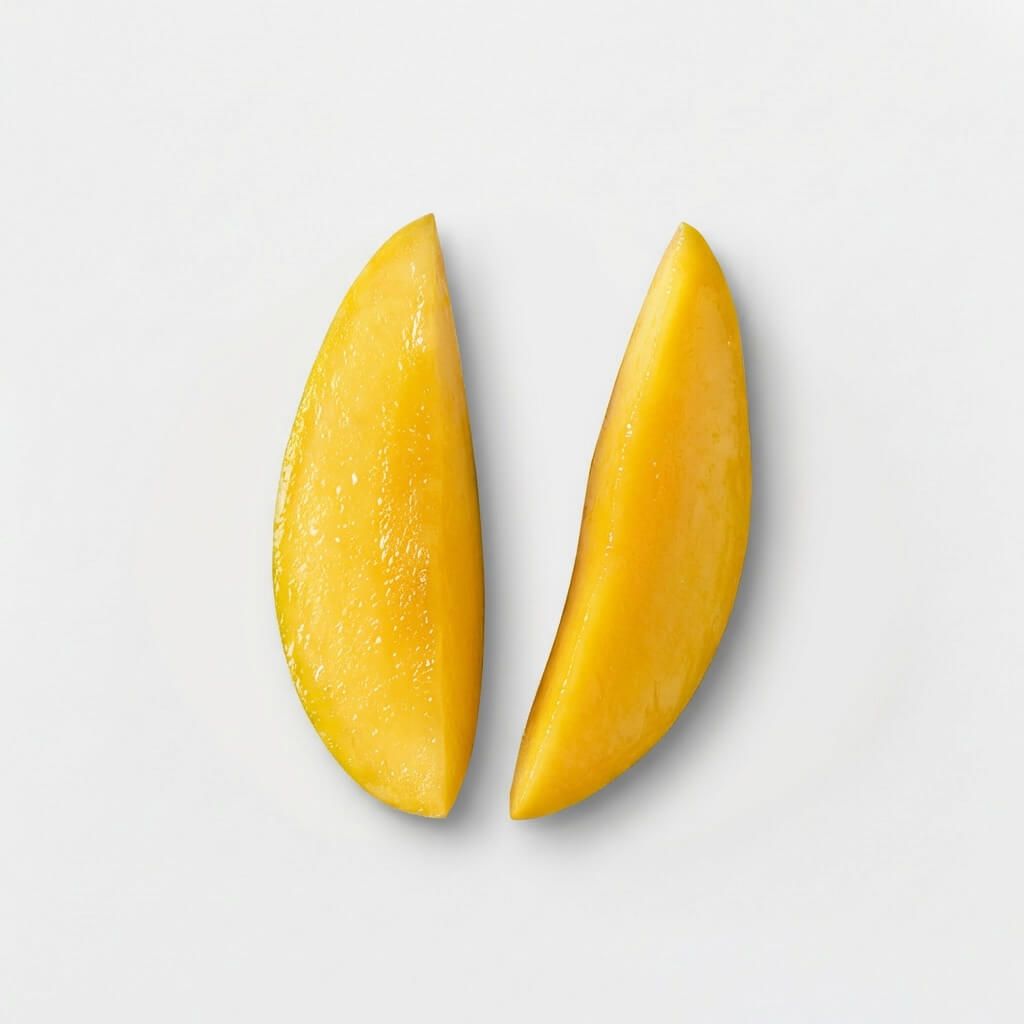
Offer long, wide spears or large chunks of very ripe mango for grasping and self-feeding. Leave a bit of peel on one end for easier grip, or roll slippery pieces in crushed cereal.
BLW from 9+ Months
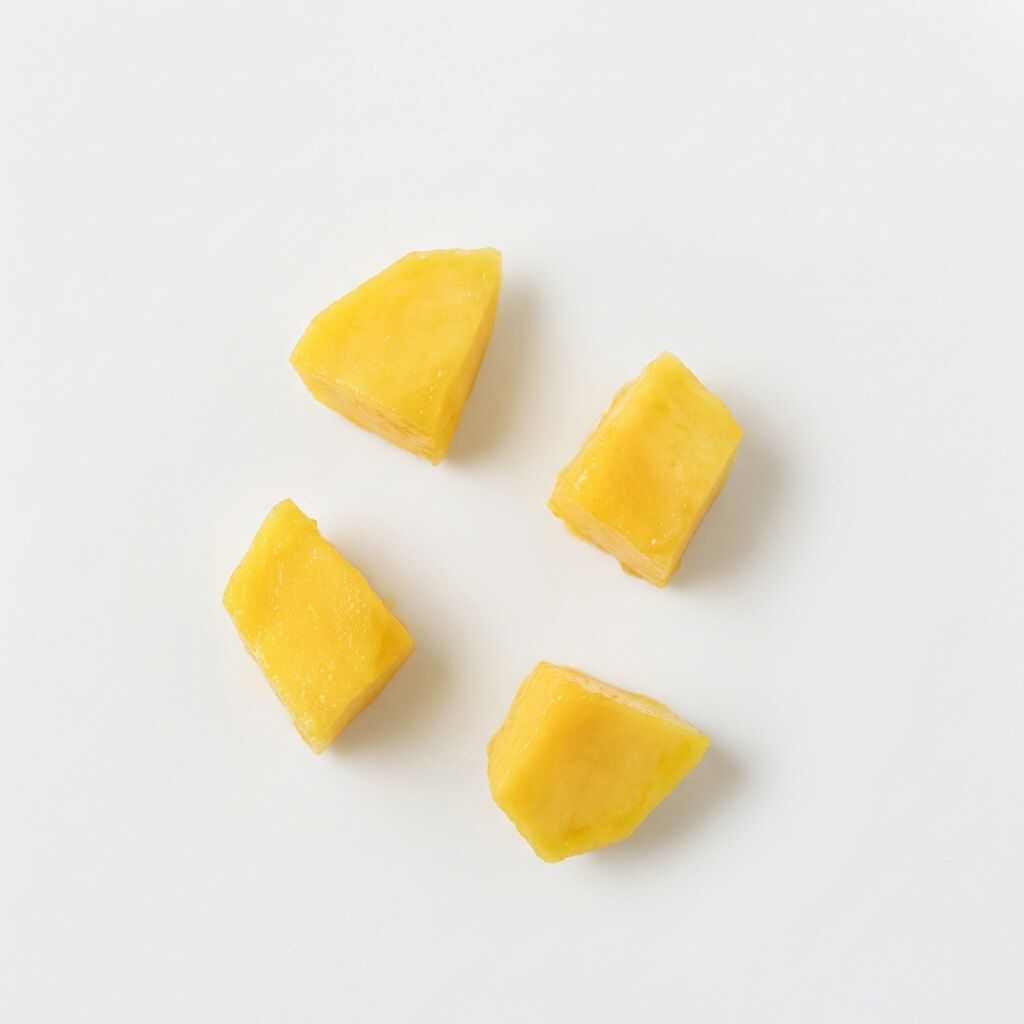
Serve small bite-sized pieces of ripe mango for pincer grasp practice or blend into smoothies for varied texture experiences. Mix with other fruits like banana or berries for nutritional variety.
BLW from 12+ Months
Offer diced ripe mango in fruit salads, mixed into yogurt parfaits, or alongside meals as refreshing side. Encourage independent fork use for developing motor skills and self-feeding confidence.
Nutritional Benefits
Mango provides exceptional vitamin A, vitamin C, and fiber supporting vision, immune health, and digestion. Naturally sweet tropical flavor encourages fruit acceptance and adventurous eating.
Key Nutrients
Vitamin A
Supports vision and immune function.
Vitamin C
Boosts immunity and collagen production.
Fiber
Aids digestion and promotes bowel regularity.
Folate
Supports brain and cell development.
Antioxidants
Protect against cellular damage.
Allergen & Choking Information
Not a Common Allergen
Mango is not a common allergen but can cause skin irritation from sap (related to poison ivy). Serve only very ripe, soft fruit cut appropriately to prevent choking.
Frequently Asked Questions
When can babies eat Mango?
Around 6 months (when ripe and soft)
How do I prepare Mango puree for my baby?
Blend very ripe mango flesh until completely smooth and creamy. Serve plain for first introduction or mix with yogurt, oatmeal, or banana for added creaminess and nutrition. The tropical flavor is very appealing.
What are the nutritional benefits of Mango?
Mango provides exceptional vitamin A, vitamin C, and fiber supporting vision, immune health, and digestion. Naturally sweet tropical flavor encourages fruit acceptance and adventurous eating.
Sources & Related Resources
Get Personalized Guidance for Every Feeding Stage
Download the Grubsy app to track meals, get tailored recommendations, and explore foods like Mango plus hundreds more, all in one place.
Disclaimer: This information is for educational purposes only and does not replace professional medical advice.