Mackerel for Babies
Baby Food Guide from 6 Months
Puree
6+
Months
BLW
6+
Months
Choking Hazard
Low (when fully deboned)
Allergen
Yes
Key Nutrients
Omega-3 Fatty Acids (DHA and EPA) • Protein • Vitamin D
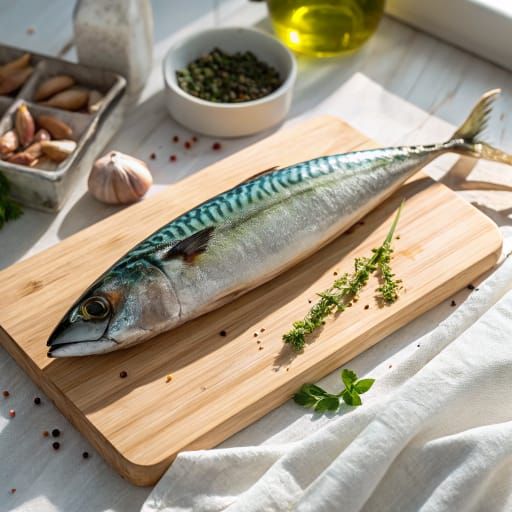
Can Babies Eat Mackerel?
Mackerel is an oily, richly flavored fish and one of the best food sources of omega-3s available to babies, specifically the DHA and EPA strongly linked to healthy brain, eye, and nervous system development. Its firm flesh flakes apart easily once cooked, which makes it simple to mash into a first puree or flake into pieces for older babies who are ready to self-feed.
Fish is a major allergen, so mackerel is worth introducing in a small first amount with close attention afterward for any reaction. The other essential step is bones: even fillets sold as boneless can hide small pin bones, so every piece of fresh fish needs a careful check, while boneless canned mackerel sidesteps the issue almost entirely. Choosing a smaller variety like North Atlantic mackerel also keeps mercury exposure low compared with larger, longer-lived fish.
Because oily fish is such a strong source of omega-3s, offering mackerel regularly, alongside other fish, is a genuinely worthwhile habit to build early.
Mackerel Baby Food: How to Prepare It
Puree from 6+ Months
Remove all bones from freshly cooked mackerel, or use boneless canned mackerel, then flake and mash or blend with mashed avocado, plain yogurt, or a little olive oil until smooth and spoonable.
BLW from 6+ Months
Offer strips of boneless canned North Atlantic mackerel, or flake deboned cooked mackerel and stir into mashed avocado, yogurt, or olive oil, served on toast strips or a pre-loaded spoon. Remove every bone from fresh fish first.
BLW from 9+ Months
Offer bite-sized flakes or pieces of deboned cooked or canned mackerel for pincer-grasp practice, plus larger strips for biting and tearing.
BLW from 12+ Months
Provide finger-length strips or small bite-sized portions, shape it into fish cakes or patties, or flake it plain and fold it through other dishes.
Nutritional Benefits
Mackerel is one of the richest food sources of omega-3 fatty acids available to babies, offering brain-supporting DHA and EPA alongside high-quality protein and vitamin D.
Key Nutrients
Omega-3 Fatty Acids (DHA and EPA)
Support brain, eye, and nervous system development.
Protein
Provides complete, easily digestible amino acids for growth.
Vitamin D
Aids calcium absorption and supports bone strength.
Vitamin B12
Supports nerve function and red blood cell formation.
Selenium
Acts as an antioxidant that helps protect cells.
Allergen & Choking Information
Common Allergen
Fish is a major allergen, so introduce mackerel in a small first amount and watch for reactions. Even fillets labeled boneless can hide small pin bones, so check fresh mackerel carefully, and choose low-mercury North Atlantic mackerel.
Frequently Asked Questions
When can babies eat Mackerel?
Around 6 months (cooked, deboned, and pureed or flaked)
How do I prepare Mackerel puree for my baby?
Remove all bones from freshly cooked mackerel, or use boneless canned mackerel, then flake and mash or blend with mashed avocado, plain yogurt, or a little olive oil until smooth and spoonable.
What are the nutritional benefits of Mackerel?
Mackerel is one of the richest food sources of omega-3 fatty acids available to babies, offering brain-supporting DHA and EPA alongside high-quality protein and vitamin D.
Sources & Related Resources
Get Personalized Guidance for Every Feeding Stage
Download the Grubsy app to track meals, get tailored recommendations, and explore foods like Mackerel plus hundreds more, all in one place.
Disclaimer: This information is for educational purposes only and does not replace professional medical advice.