Kohlrabi for Babies
Baby Food Guide from 6 Months
Puree
6+
Months
BLW
6+
Months
Choking Hazard
High (raw); Low (cooked soft)
Allergen
No
Key Nutrients
Vitamin C • Fiber • Antioxidants
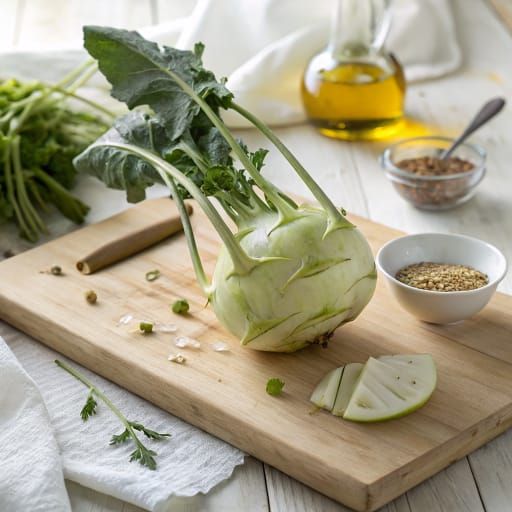
Can Babies Eat Kohlrabi?
Kohlrabi is a mild, faintly sweet member of the cabbage family, grown for its round bulb, and it tastes a bit like a cross between a broccoli stem and a crisp apple. It holds its shape well once cooked, which makes it a good way to add real texture variety beyond the soft orange and green purees that dominate early feeding, alongside a solid dose of vitamin C, fiber, and potassium.
Texture, not allergy, is the safety story here. Raw kohlrabi is dense and firm, closer to a raw carrot or turnip than anything soft, so it needs to be cooked until completely soft, mashable between two fingers, for babies under 12 months. The tough outer skin gets peeled away first too, since it never really softens the way the inner flesh does.
Kohlrabi isn't a common allergen. Green and purple varieties taste almost identical once peeled, so either is fine to pick, and it's often at its sweetest in the cooler months.
Kohlrabi Baby Food: How to Prepare It
Puree from 6+ Months
Peel away the tough outer skin, cut the bulb into chunks, and steam or boil until completely soft. Mash or blend with cooking water, breast milk, or formula until smooth.
BLW from 6+ Months
Offer peeled wedges cooked until fully soft and large enough for baby to hold with a fist and gnaw on. A soft mash also works well at this stage.
BLW from 9+ Months
Bite-sized soft-cooked pieces or finely grated raw kohlrabi work well once the pincer grasp develops. Babies still working on chewing can continue with soft mashed kohlrabi or large soft-cooked wedges.
BLW from 12+ Months
Introduce paper-thin raw slices or raw shreds as biting and tearing skills improve. Grated kohlrabi also works nicely folded into fritters, patties, or dumplings.
Nutritional Benefits
Kohlrabi delivers a strong dose of vitamin C and fiber in a vegetable that holds its shape well when cooked, making it a nutritious way to add texture variety to early meals.
Key Nutrients
Vitamin C
Supports the immune system and boosts iron absorption from other foods.
Fiber
Promotes healthy digestion and regular bowel movements.
Antioxidants
Help protect growing cells from damage.
Potassium
Supports healthy muscle and heart function.
Vitamin B6
Aids brain development and metabolism.
Allergen & Choking Information
Not a Common Allergen
Kohlrabi is not a common allergen. Raw kohlrabi is firm and dense, a genuine choking hazard for young children, so it must be cooked until completely soft for babies under 12 months and offered only in paper-thin slices or fine shreds once introduced raw.
Frequently Asked Questions
When can babies eat Kohlrabi?
Around 6 months (cooked until very soft)
How do I prepare Kohlrabi puree for my baby?
Peel away the tough outer skin, cut the bulb into chunks, and steam or boil until completely soft. Mash or blend with cooking water, breast milk, or formula until smooth.
What are the nutritional benefits of Kohlrabi?
Kohlrabi delivers a strong dose of vitamin C and fiber in a vegetable that holds its shape well when cooked, making it a nutritious way to add texture variety to early meals.
Sources & Related Resources
Get Personalized Guidance for Every Feeding Stage
Download the Grubsy app to track meals, get tailored recommendations, and explore foods like Kohlrabi plus hundreds more, all in one place.
Disclaimer: This information is for educational purposes only and does not replace professional medical advice.