Kale for Babies
Baby Food Guide from 6 Months
Puree
6+
Months
BLW
6+
Months
Choking Hazard
Low
Allergen
No
Key Nutrients
Calcium • Iron • Vitamin C
Can Babies Eat Kale?
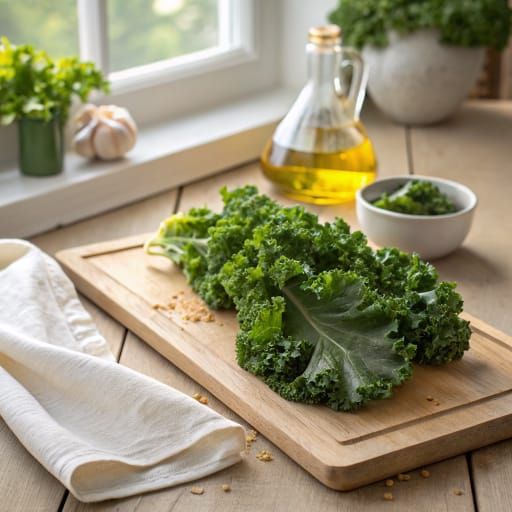
Kale is a hardy, dark leafy green with an earthy, slightly bitter flavor that mellows considerably once it's cooked down soft. It's part of the same family as broccoli and cabbage, and it's become a popular vegetable in recent years for good reason: it's unusually nutrient-dense for a leafy green, packing in calcium, iron, and vitamin C, which conveniently helps the body absorb that iron, even in the small amounts a baby eats at first.
The bitterness can be an acquired taste on the first try, so blending cooked kale into a familiar mashed vegetable, porridge, or cheesy pasta sauce usually goes over better than serving it plain the first few times. The stems are genuinely tough and fibrous, so they're stripped away before cooking, though a thick raw stem also makes a sturdy, safe teether for a baby to gnaw on without swallowing much.
Kale isn't a common allergen, so there's no special introduction to plan around, just some patience while your baby's palate warms up to the taste.
Kale Baby Food: How to Prepare It
Puree from 6+ Months
Strip the leaves from the tough stems, cook until soft, and blend with a little water, breast milk, or formula. Blending into mashed vegetables or porridge helps mellow the bitterness.
BLW from 6+ Months
Stir finely chopped or shredded cooked kale into mashed vegetables or porridge. A thick raw stem can also serve as a graspable teether that your baby gums without eating much of it.
BLW from 9+ Months
Offer shredded kale, raw or cooked, as a self-feeding finger food, or try baked kale chips made crisp enough to crumble easily.
BLW from 12+ Months
Serve kale fairly freely now, cooked or raw, chopped, shredded, or in bigger pieces, and encourage self-feeding with utensils as your toddler's skills develop.
Nutritional Benefits
Kale packs calcium, iron, vitamin C, and antioxidants into a low-calorie leafy green, offering unusually dense nutrition for the small amounts babies eat early on. It's a strong choice for rounding out a varied vegetable rotation.
Key Nutrients
Calcium
Supports healthy bone development.
Iron
Supports healthy blood and brain development.
Vitamin C
Boosts immunity and helps the body absorb iron.
Fiber
Supports healthy digestion.
Antioxidants
Help protect rapidly developing cells.
Vitamin K
Supports bone health and normal blood clotting.
Allergen & Choking Information
Not a Common Allergen
Kale is not a common allergen. The tough, fibrous stems are hard to chew, so remove them from the leaf before cooking or offer a thick stem only as a teether rather than a food to swallow.
Frequently Asked Questions
When can babies eat Kale?
Around 6 months (finely chopped into soft foods or blended into purees)
How do I prepare Kale puree for my baby?
Strip the leaves from the tough stems, cook until soft, and blend with a little water, breast milk, or formula. Blending into mashed vegetables or porridge helps mellow the bitterness.
What are the nutritional benefits of Kale?
Kale packs calcium, iron, vitamin C, and antioxidants into a low-calorie leafy green, offering unusually dense nutrition for the small amounts babies eat early on. It's a strong choice for rounding out a varied vegetable rotation.
Sources & Related Resources
Get Personalized Guidance for Every Feeding Stage
Download the Grubsy app to track meals, get tailored recommendations, and explore foods like Kale plus hundreds more, all in one place.
Disclaimer: This information is for educational purposes only and does not replace professional medical advice.