Hazelnut for Babies
Baby Food Guide from 6 Months
Puree
6+
Months
BLW
6+
Months
Choking Hazard
High (whole nuts; only finely ground or thinned butter before age 3)
Allergen
Yes
Key Nutrients
Healthy Fats • Protein • Iron
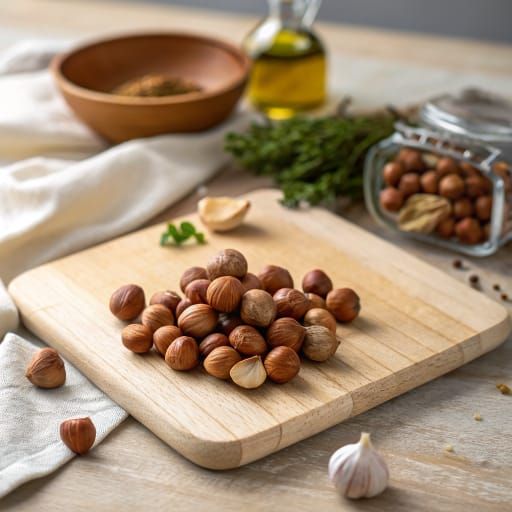
Can Babies Eat Hazelnut?
Hazelnuts are a rich, buttery tree nut whose flavor deepens when lightly toasted, and they bring real nutritional weight to an early diet: healthy fats for brain development, plant protein for growth, iron, vitamin E, and fiber, all in a calorie-dense package that's genuinely useful for a small, fast-growing body.
Hazelnuts are a tree nut, one of the major food allergens, so they need a small first amount and close attention afterward, ideally once your baby has already tolerated a few other new foods. Whole hazelnuts are also hard and round enough to be a serious choking hazard, so from 6 months they're offered only finely ground into powder or as hazelnut butter thinned until spreadable, never whole or roughly chopped, and that stays true for years.
Worth knowing: chocolate hazelnut spread is a different product entirely, heavy on sugar and palm oil, so it doesn't count as a real introduction to the allergen.
Hazelnut Baby Food: How to Prepare It
Puree from 6+ Months
Grind hazelnuts to a fine powder with no larger pieces, or thin hazelnut butter with water, breast milk, or formula until spreadable. Stir into yogurt, warm cereal, or a fruit mash.
BLW from 6+ Months
Sprinkle finely ground hazelnuts, with no large pieces, over yogurt, cereal, or soft fruit, or offer hazelnut butter thinned to a spreadable consistency. Start with a small first amount and watch for a reaction.
BLW from 9+ Months
Continue offering finely ground hazelnuts mixed into soft foods, or thinned hazelnut butter stirred into yogurt or oatmeal. Whole or chopped hazelnuts remain unsafe at this age.
BLW from 12+ Months
Keep using finely ground hazelnuts, spread thinned hazelnut butter on toast, and offer hazelnut milk occasionally as a drink. Whole hazelnuts stay off the menu until around age 3, and only then with mature chewing skills, close supervision, and an adult modeling how to bite, move the piece to the molars, and chew thoroughly.
Nutritional Benefits
Hazelnuts combine healthy fats, plant protein, iron, and vitamin E in a calorie-dense package that supports a growing baby's brain and body. Ground fine or thinned into butter, they're a valuable addition to a baby's fat and protein intake.
Key Nutrients
Healthy Fats
Support brain development and provide concentrated energy.
Protein
Aids muscle and tissue growth.
Iron
Supports healthy blood and brain development.
Vitamin E
Acts as an antioxidant and supports skin health.
Fiber
Aids healthy digestion.
Allergen & Choking Information
Common Allergen
Hazelnuts are a tree nut, one of the nine major food allergens, so introduce a small first amount and watch closely for a reaction. Whole hazelnuts are also hard, round, and a serious choking hazard, so offer only finely ground hazelnuts or well-thinned hazelnut butter until your child is several years old with mature chewing skills.
Frequently Asked Questions
When can babies eat Hazelnuts?
Around 6 months (only finely ground or as thin, diluted butter)
How do I prepare Hazelnuts puree for my baby?
Grind hazelnuts to a fine powder with no larger pieces, or thin hazelnut butter with water, breast milk, or formula until spreadable. Stir into yogurt, warm cereal, or a fruit mash.
What are the nutritional benefits of Hazelnuts?
Hazelnuts combine healthy fats, plant protein, iron, and vitamin E in a calorie-dense package that supports a growing baby's brain and body. Ground fine or thinned into butter, they're a valuable addition to a baby's fat and protein intake.
Sources & Related Resources
Get Personalized Guidance for Every Feeding Stage
Download the Grubsy app to track meals, get tailored recommendations, and explore foods like Hazelnut plus hundreds more, all in one place.
Disclaimer: This information is for educational purposes only and does not replace professional medical advice.