Green Beans for Babies
Baby Food Guide from 6 Months
Puree
6+
Months
BLW
6+
Months
Choking Hazard
Moderate (serve whole, soft-cooked pods at first; avoid small firm pieces)
Allergen
No
Key Nutrients
Fiber • Vitamin C • Vitamin K
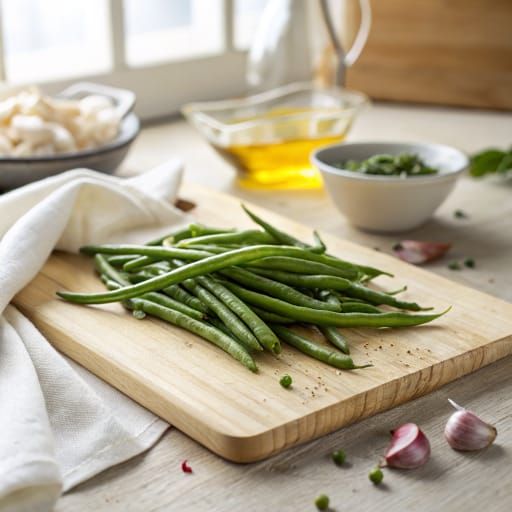
Can Babies Eat Green Beans?
Green beans are a familiar garden vegetable, most families already have them in the rotation, with a mild, slightly grassy flavor that turns sweeter and softer the longer it cooks. They're a reliable source of fiber and vitamin C, plus antioxidants, and they've long had a reputation as one of the gentler vegetables for babies who are prone to constipation.
The interesting twist with green beans is that whole is actually safer than chopped. Small, firm, pre-cut pieces are roughly the size and shape of a baby's airway, so cooking whole pods until genuinely soft and letting your baby gum and mash them between their gums is the safer starting approach, rather than cutting them into little pieces first.
Green beans aren't a common allergen. They're also easy to keep on hand year-round, since fresh, frozen, and canned versions all work well, and frozen beans cook quickly straight from frozen while keeping most of their nutrition intact.
Green Beans Baby Food: How to Prepare It
Puree from 6+ Months
Steam or boil trimmed green beans until very soft, then blend with a little cooking water, breast milk, or formula until smooth. Blend thoroughly or pass through a sieve, since the skins can be fibrous.
BLW from 6+ Months
Offer whole, cooked-soft pods left uncut; munching flattens the little beans inside, which is safer than pre-cut chunks. Pressing the pods flat with a fork first adds extra reassurance.
BLW from 9+ Months
Continue whole soft-cooked pods for self-feeding practice as your baby's chewing skills develop, pressing them flat with a fork if it helps.
BLW from 12+ Months
Cut cooked green beans into bite-sized pieces, ideal for practicing stabbing with a fork. Around 18 months, cook them slightly less for a firmer texture and chewing practice, or serve whole beans alongside a dip.
Nutritional Benefits
Green beans provide reliable fiber, vitamin C, and antioxidants in a mild, easy-to-prepare package that most babies accept readily. They're a practical, year-round vegetable that supports healthy digestion.
Key Nutrients
Fiber
Supports digestion and helps prevent constipation.
Vitamin C
Boosts immunity and helps the body absorb iron.
Vitamin K
Supports bone health and normal blood clotting.
Folate
Supports healthy cell growth.
Antioxidants
Help protect developing cells from damage.
Allergen & Choking Information
Not a Common Allergen
Green beans are not a common allergen. Small, firm pieces are close in size and shape to a baby's airway, so serve whole pods cooked until genuinely soft at first rather than cutting them into small chunks.
Frequently Asked Questions
When can babies eat Green Beans?
Around 6 months (as a puree or whole, soft-cooked pods)
How do I prepare Green Beans puree for my baby?
Steam or boil trimmed green beans until very soft, then blend with a little cooking water, breast milk, or formula until smooth. Blend thoroughly or pass through a sieve, since the skins can be fibrous.
What are the nutritional benefits of Green Beans?
Green beans provide reliable fiber, vitamin C, and antioxidants in a mild, easy-to-prepare package that most babies accept readily. They're a practical, year-round vegetable that supports healthy digestion.
Sources & Related Resources
Get Personalized Guidance for Every Feeding Stage
Download the Grubsy app to track meals, get tailored recommendations, and explore foods like Green Beans plus hundreds more, all in one place.
Disclaimer: This information is for educational purposes only and does not replace professional medical advice.