Ginger for Babies
Baby Food Guide from 6 Months
Puree
6+
Months
BLW
6+
Months
Choking Hazard
Low
Allergen
No
Key Nutrients
Gingerol • Manganese • Vitamin B6
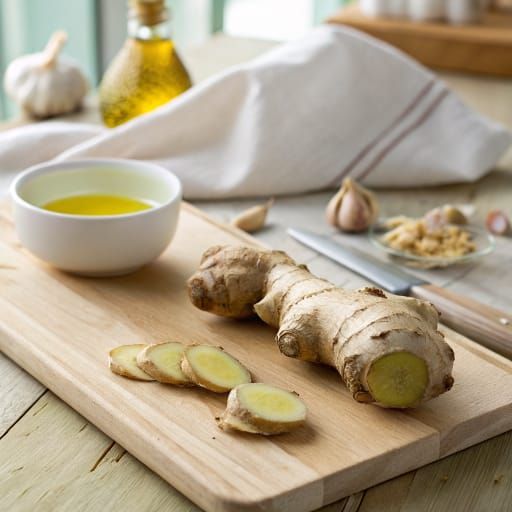
Can Babies Eat Ginger?
Ginger is a warm, faintly spicy root that has flavored food and soothed upset stomachs for centuries. For babies it works less as a food in its own right and more as a seasoning, a small pinch stirred into purees, congee, or mashed sweet potato from around 6 months, the same way a parent might use cinnamon.
Because babies only ever get a pinch at a time, ginger won't add much to daily nutrition on its own, but it does bring gingerol, the compound behind its warmth and its long traditional use for settling an upset stomach, plus small traces of manganese, magnesium, and potassium. It's also a gentle, easy way to introduce a bolder, less purely sweet flavor before spicier foods show up later in childhood.
Ginger isn't a common allergen, so no special introduction is needed, just keep the amount small since the flavor is strong and a little goes a long way. One thing worth knowing: candied or crystallized ginger is a different, sugary product that's firm enough to be a choking risk, so it's not a stand-in for fresh or ground root ginger.
Ginger Baby Food: How to Prepare It
Puree from 6+ Months
Stir a small amount of freshly grated or powdered ginger into fruit and vegetable purees such as mango or sweet potato, or into a soft, scoopable dish like congee.
BLW from 6+ Months
Mix a little fresh grated or powdered ginger into your baby's meals to season fruits, vegetables, or soft foods like congee, mashed sweet potato, or soft rice balls. A little goes a long way given its strong flavor.
BLW from 9+ Months
Continue seasoning purees and soft, scoopable meals with small amounts of fresh or powdered ginger, tasting the finished dish before serving to keep the flavor gentle.
BLW from 12+ Months
Grating is no longer necessary; thin fresh slices work well in cooking too. Stir ginger into baked goods, offer grated or thinly sliced pickled ginger, and serve warm, never hot, ginger tea in an open cup.
Nutritional Benefits
Ginger is used in small amounts, so it's best thought of as a flavorful, mildly soothing seasoning rather than a major nutrient source. Its bioactive compounds have a long history of easing digestive discomfort.
Key Nutrients
Gingerol
A bioactive compound traditionally used to ease digestion and soothe an upset stomach.
Manganese
Supports healthy bone development and metabolism.
Vitamin B6
Plays a role in brain development.
Magnesium
Supports muscle and nerve function.
Potassium
Helps maintain healthy fluid balance.
Allergen & Choking Information
Not a Common Allergen
Ginger is not a common allergen and true reactions are rare. Because babies eat it only in small seasoning amounts, choking risk is minimal, though ginger tea should always be served warm, not hot, and only once your baby can drink from an open cup.
Frequently Asked Questions
When can babies eat Ginger?
Around 6 months (a small amount stirred into purees)
How do I prepare Ginger puree for my baby?
Stir a small amount of freshly grated or powdered ginger into fruit and vegetable purees such as mango or sweet potato, or into a soft, scoopable dish like congee.
What are the nutritional benefits of Ginger?
Ginger is used in small amounts, so it's best thought of as a flavorful, mildly soothing seasoning rather than a major nutrient source. Its bioactive compounds have a long history of easing digestive discomfort.
Sources & Related Resources
Get Personalized Guidance for Every Feeding Stage
Download the Grubsy app to track meals, get tailored recommendations, and explore foods like Ginger plus hundreds more, all in one place.
Disclaimer: This information is for educational purposes only and does not replace professional medical advice.