Fennel for Babies
Baby Food Guide from 6 Months
Puree
6+
Months
BLW
6+
Months
Choking Hazard
Moderate (raw bulb is firm; always cook until soft before 12 months)
Allergen
No
Key Nutrients
Fiber • Vitamin C • Folate
Can Babies Eat Fennel?
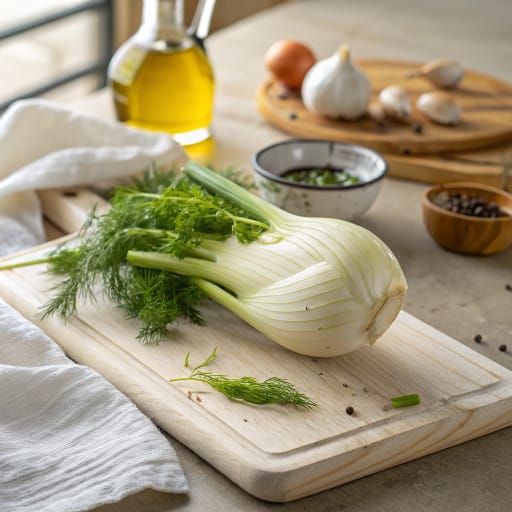
Fennel is a crisp, pale green bulb with a naturally sweet, faintly licorice flavor that mellows considerably once cooked. It's a relative of carrot and celery and brings a similar gentle nutrition profile: fiber, vitamin C, folate, and potassium, useful for a baby's developing digestion and immune system. Its distinctive taste also makes it a good way to broaden a palate that's used to the usual sweet vegetables like carrot and sweet potato.
Fennel isn't a common allergen, so texture is really the only thing to plan around. The raw bulb is dense and fibrous, genuinely hard to bite through, so it needs to be cooked until soft and slightly translucent for a young baby; raw slices only make sense once chewing is confident, generally past 12 months. The feathery fronds on top are edible too and work well chopped finely into a puree.
Roasting fennel wedges with a little olive oil caramelizes its natural sugars and softens the licorice edge. That small trick often wins over a toddler who wasn't sure about the first taste.
Fennel Baby Food: How to Prepare It
Puree from 6+ Months
Slice the bulb and cook until very tender, then blend until smooth, adding a little cooking water as needed. Finely chopped fronds can also be stirred into porridge, yogurt, or another soft food.
BLW from 6+ Months
Offer large wedges of the outer bulb layers cooked until soft enough for your baby to grip and gnaw. Finely chopped fronds can be mixed into soft foods for extra flavor.
BLW from 9+ Months
Cut softly cooked fennel into small, bite-sized pieces once the pincer grasp develops, and try finely grated raw fennel in small amounts mixed into other foods.
BLW from 12+ Months
Offer large cooked wedges, thin cooked slices, or thin raw slices to help your toddler build biting and chewing strength. Roasting wedges with a little olive oil caramelizes the natural sugars and can make the flavor more appealing.
Nutritional Benefits
Fennel offers gentle fiber, vitamin C, and potassium in a naturally sweet, aniseed-flavored package that helps broaden a baby's palate beyond the usual sweet vegetables. It's a low-effort way to add variety to the vegetable rotation.
Key Nutrients
Fiber
Supports healthy digestion and helps prevent constipation.
Vitamin C
Boosts immunity and helps the body absorb iron.
Folate
Supports healthy cell growth.
Potassium
Helps regulate muscle and heart function.
Antioxidants
Help protect developing cells from damage.
Allergen & Choking Information
Not a Common Allergen
Fennel is not a common allergen. The raw bulb is dense and fibrous, so always cook it until soft before offering it, and hold off on raw slices until your baby is chewing confidently at around 12 months or older.
Frequently Asked Questions
When can babies eat Fennel?
Around 6 months (cooked until soft and pureed or in soft wedges)
How do I prepare Fennel puree for my baby?
Slice the bulb and cook until very tender, then blend until smooth, adding a little cooking water as needed. Finely chopped fronds can also be stirred into porridge, yogurt, or another soft food.
What are the nutritional benefits of Fennel?
Fennel offers gentle fiber, vitamin C, and potassium in a naturally sweet, aniseed-flavored package that helps broaden a baby's palate beyond the usual sweet vegetables. It's a low-effort way to add variety to the vegetable rotation.
Sources & Related Resources
Get Personalized Guidance for Every Feeding Stage
Download the Grubsy app to track meals, get tailored recommendations, and explore foods like Fennel plus hundreds more, all in one place.
Disclaimer: This information is for educational purposes only and does not replace professional medical advice.