Dill for Babies
Baby Food Guide from 6 Months
Puree
6+
Months
BLW
6+
Months
Choking Hazard
Low (mince finely; larger pieces or coarse stems may cause gagging)
Allergen
No
Key Nutrients
Vitamin C • Vitamin A • Manganese
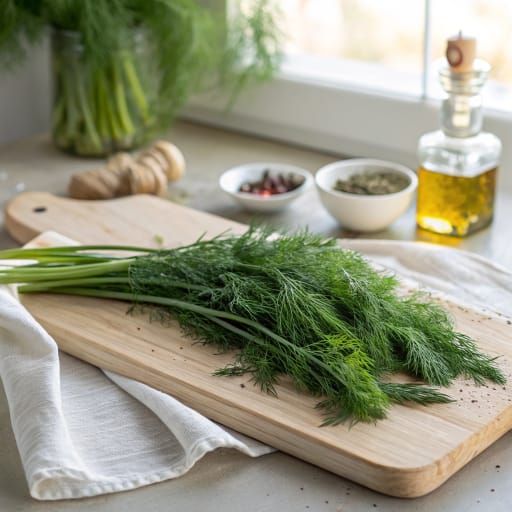
Can Babies Eat Dill?
Dill is a feathery, aromatic herb with a fresh, faintly anise flavor, more a seasoning than a food in its own right. Used in small pinches, its nutritional contribution is modest, a little vitamin C, vitamin A, and manganese, but that's not really the point. Introducing herbs like dill early is one of the simplest ways to widen a baby's flavor experience well before they're ready for stronger spices.
The only real consideration is texture, not allergy, since dill rarely triggers a reaction. Mince fresh dill very finely before stirring it into purees or sauces, since coarse stems or larger pieces can trigger a gag in a baby who isn't used to fibrous bits yet. Dried dill or dill weed powder sidesteps this entirely and blends into anything without a second thought.
Worth knowing: dill pickles are a separate matter. They're high in salt and vinegar and belong much later, well past the gentle, herb-only introduction described here.
Dill Baby Food: How to Prepare It
Puree from 6+ Months
Stir a small pinch of finely minced fresh dill, or a little dried dill or dill weed powder, into a smooth puree or mash to introduce a gentle new flavor.
BLW from 6+ Months
Mince fresh dill finely and work a little into soft foods suited to baby's stage, such as a dressing spooned over cooked vegetables or a simple meat sauce. Dried dill or dill weed powder can be used the same way.
BLW from 9+ Months
Continue mixing finely minced or dried dill into a wider range of soft foods as baby's diet expands, using it the same way you would season a dish for the rest of the family, just in smaller amounts.
BLW from 12+ Months
Season meals with dill in whatever form you have on hand, fresh fronds, dried, or powdered, much as you would when cooking for the rest of the family. Keep an eye out for gagging if any pieces are on the larger side.
Nutritional Benefits
Dill is used in small amounts, so its nutritional contribution is modest, but it adds trace vitamins, antioxidants, and aromatic variety that help broaden a baby's palate early on.
Key Nutrients
Vitamin C
Fresh dill contributes small amounts of this immune-supporting vitamin.
Vitamin A
Supports healthy vision, skin, and immune function.
Manganese
Contributes to bone development and metabolism.
Antioxidants (Flavonoids)
Plant compounds that help protect the body's growing cells.
Aromatic Oils
Give dill its distinctive flavor and may support healthy digestion.
Allergen & Choking Information
Not a Common Allergen
Dill is not a common allergen and is generally well tolerated by babies. The main consideration is texture rather than allergy: mince fresh dill finely, or use dried dill or dill weed powder, since larger pieces or coarse stems can cause gagging in a young baby who isn't used to fibrous textures yet.
Frequently Asked Questions
When can babies eat Dill?
Around 6 months (finely minced, stirred into purees or soft foods)
How do I prepare Dill puree for my baby?
Stir a small pinch of finely minced fresh dill, or a little dried dill or dill weed powder, into a smooth puree or mash to introduce a gentle new flavor.
What are the nutritional benefits of Dill?
Dill is used in small amounts, so its nutritional contribution is modest, but it adds trace vitamins, antioxidants, and aromatic variety that help broaden a baby's palate early on.
Sources & Related Resources
Get Personalized Guidance for Every Feeding Stage
Download the Grubsy app to track meals, get tailored recommendations, and explore foods like Dill plus hundreds more, all in one place.
Disclaimer: This information is for educational purposes only and does not replace professional medical advice.