Dates for Babies
Baby Food Guide from 6 Months
Puree
6+
Months
BLW
6+
Months
Choking Hazard
High (whole, dried, or with pit); Low (pitted, rehydrated, and mashed or pureed)
Allergen
No
Key Nutrients
Dietary Fiber • Potassium • Natural Sugars
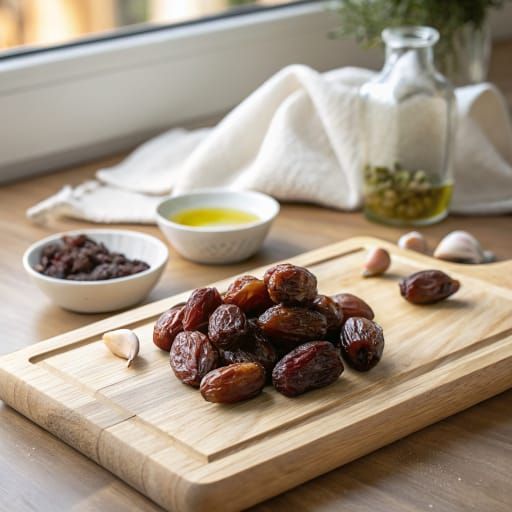
Can Babies Eat Dates?
Dates are the sticky, deeply sweet fruit of the date palm, most often sold dried and wrinkled, though fresh ones turn up in some regions with a softer, milder sweetness. Their appeal for baby food is simple: an almost caramel-like sweetness with no added sugar, plus fiber that genuinely helps digestion, potassium, and a little iron.
Preparation is what matters most here, not allergy risk, since dates aren't a common allergen. Every date has a single hard pit that must be checked for and removed, and dried dates need to be soaked in hot water for 10 to 15 minutes until fully soft before mashing or chopping; served any other way, they're both sticky and firm enough to be a genuine choking risk. Start with a small amount too, since the fiber content can upset a young stomach.
Because dates are so sticky, a little extra attention to teeth is worth it once they arrive, and a sip of water afterward helps clear residue. A whole pitted date is a later milestone, generally once a child is confidently chewing around 18 months.
Dates Baby Food: How to Prepare It
Puree from 6+ Months
Soak pitted dried dates in hot water for 10-15 minutes until completely soft, then puree or mash to a smooth paste. Stir a small amount into oatmeal, yogurt, or another familiar scoopable food.
BLW from 6+ Months
Double-check that every pit is removed, rehydrate dried dates in hot water for 10-15 minutes, then finely chop, mash, or puree once fully soft. Mix into scoopable foods and start with small amounts, since dates are very fiber-rich.
BLW from 9+ Months
Continue offering well-softened, rehydrated dates mashed or finely chopped into scoopable foods, gradually leaving slightly more texture as baby gets used to managing small soft pieces.
BLW from 12+ Months
Offer fully softened, rehydrated dates cut into small pieces, as a puree, or stirred into scoopable foods. Fresh dates should be very soft and cut bite-sized. Save a whole pitted dried date for around 18 months, held by an adult at first while your child learns to take small bites.
Nutritional Benefits
Dates are a naturally sweet, fiber-rich fruit that provide potassium, a little iron, and antioxidants, making them a nutritious way to add natural sweetness once properly softened and pitted.
Key Nutrients
Dietary Fiber
Supports healthy digestion and regular bowel movements.
Potassium
Supports healthy muscle function and fluid balance.
Natural Sugars
Provide a concentrated, quickly available source of energy.
Iron
Contributes a small amount toward baby's growing iron needs.
Antioxidants
Plant polyphenols help protect the body's growing cells.
Allergen & Choking Information
Not a Common Allergen
Dates are not a common allergen. The safety consideration is entirely about preparation: dried dates are sticky and firm, and a forgotten pit is a serious hazard, so every pit must be checked for and removed, and dried dates should be rehydrated in hot water until fully soft before mashing, chopping, or pureeing. Because dates are so fiber-rich, start with small amounts to avoid an upset stomach.
Frequently Asked Questions
When can babies eat Dates?
Around 6 months (pitted, rehydrated, and mashed or pureed)
How do I prepare Dates puree for my baby?
Soak pitted dried dates in hot water for 10-15 minutes until completely soft, then puree or mash to a smooth paste. Stir a small amount into oatmeal, yogurt, or another familiar scoopable food.
What are the nutritional benefits of Dates?
Dates are a naturally sweet, fiber-rich fruit that provide potassium, a little iron, and antioxidants, making them a nutritious way to add natural sweetness once properly softened and pitted.
Sources & Related Resources
Get Personalized Guidance for Every Feeding Stage
Download the Grubsy app to track meals, get tailored recommendations, and explore foods like Dates plus hundreds more, all in one place.
Disclaimer: This information is for educational purposes only and does not replace professional medical advice.