Couscous for Babies
Baby Food Guide from 6 Months
Puree
6+
Months
BLW
6+
Months
Choking Hazard
Moderate (loose, dry beads can scatter; always cook until very soft and mix with sticky purees or yogurt)
Allergen
Yes
Key Nutrients
Carbohydrates • Selenium • B Vitamins
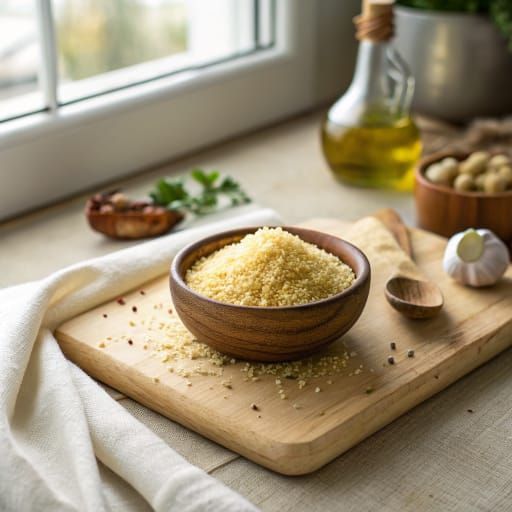
Can Babies Eat Couscous?
Couscous is tiny steamed pasta made from durum wheat semolina, with a mild flavor that takes on whatever it's cooked with. It's not a nutritional standout on its own, more a source of quick energy plus a little plant protein and B vitamins, so think of it as a flexible carb to round out a meal rather than the main event. It's also a familiar staple of North African and Mediterranean cooking, easy to mix into whatever a baby's already eating.
Its real significance for babies is that it's made from wheat, one of the most common food allergens, and current guidance favors introducing wheat within the first year rather than waiting. Texture matters too: the small round beads can scatter if served dry, so cook couscous until very soft and mix it into something sticky like yogurt or mashed fruit so it clumps instead of rolling around.
Worth knowing: the quick-cooking couscous in most supermarkets is different from Israeli or pearl couscous, which is rolled into larger, chewier balls unsuitable for babies. Whole wheat couscous works the same way in cooking, just with a bit more fiber.
Couscous Baby Food: How to Prepare It
Puree from 6+ Months
Cook couscous until very soft in water, milk, or a mild broth, then stir it into mashed vegetables, fruit, or yogurt so the tiny beads bind together into a smooth, spoonable mash.
BLW from 6+ Months
Serve couscous alongside sticky foods like mashed fruit, cooked vegetables, or yogurt so the beads cling to baby's hands and food rather than scattering. Offer water afterward to help clear any stray beads, and expect a mess.
BLW from 9+ Months
Continue pairing couscous with sticky, scoopable foods, and start offering small amounts on a pre-loaded spoon to build early utensil awareness alongside hands-on eating.
BLW from 12+ Months
Keep pairing couscous with soft, scoopable foods and introduce a fork or spoon for practice. Eating with hands is still perfectly fine at this stage.
Nutritional Benefits
Couscous is primarily an energy-dense carbohydrate food, offering B vitamins, selenium, and small amounts of plant protein that round out a varied early diet.
Key Nutrients
Carbohydrates
Provide a readily available source of energy for an active, growing baby.
Selenium
Supports healthy immune function and acts as an antioxidant.
B Vitamins
Niacin and folate support energy metabolism and cell growth.
Plant Protein
Contributes a modest amount of protein alongside other foods.
Manganese
Supports bone development and metabolism.
Allergen & Choking Information
Common Allergen
Couscous is made from durum wheat, which contains gluten, and wheat is one of the most common food allergens in young children. Introduce it in a small amount at first and watch for a reaction, particularly if wheat hasn't been offered before. Because the beads are small, firm, and can scatter, always cook couscous until very soft and pair it with a sticky food to help it clump together.
Frequently Asked Questions
When can babies eat Couscous?
Around 6 months (well-cooked and softened, mixed into sticky purees)
How do I prepare Couscous puree for my baby?
Cook couscous until very soft in water, milk, or a mild broth, then stir it into mashed vegetables, fruit, or yogurt so the tiny beads bind together into a smooth, spoonable mash.
What are the nutritional benefits of Couscous?
Couscous is primarily an energy-dense carbohydrate food, offering B vitamins, selenium, and small amounts of plant protein that round out a varied early diet.
Sources & Related Resources
Get Personalized Guidance for Every Feeding Stage
Download the Grubsy app to track meals, get tailored recommendations, and explore foods like Couscous plus hundreds more, all in one place.
Disclaimer: This information is for educational purposes only and does not replace professional medical advice.