Coconut for Babies
Baby Food Guide from 6 Months
Puree
6+
Months
BLW
6+
Months
Choking Hazard
Moderate (Low when finely shredded, pureed, or liquid; High as firm mature pieces or chips before around 18 months)
Allergen
No
Key Nutrients
Healthy Fats (MCTs) • Dietary Fiber • Manganese
Can Babies Eat Coconut?
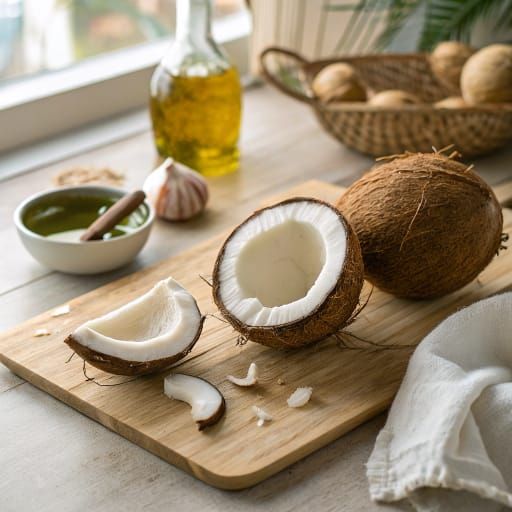
Coconut is the fruit of the coconut palm, and despite food labels sometimes grouping it with tree nuts for legal reasons, it's botanically a fruit rather than a true nut. That matters for allergies, more on that below, but it also comes in so many forms, shredded, milk, oil, water, fresh flesh, that it's worth knowing which one suits which age.
Much of its fat is made up of medium-chain triglycerides, a type the body converts to energy quickly, which is genuinely useful for a baby whose stomach is tiny but whose energy needs are enormous. Coconut also contributes fiber, manganese, and copper.
Coconut isn't one of the nine major allergens, so a true reaction is uncommon, though it's still worth watching the first time like any new food. The real issue is texture: firm mature coconut and coconut chips are hard enough to be a choking risk, so stick to finely shredded coconut, milk, or oil until baby is chewing reliably, generally after 18 months.
Coconut Baby Food: How to Prepare It
Puree from 6+ Months
Stir finely shredded unsweetened dried coconut into warm oatmeal or cereal, or blend a spoonful of coconut milk or coconut oil into vegetable and fruit purees for extra richness and calories. Avoid coconut chips and flakes completely at this stage.
BLW from 6+ Months
Continue mixing finely shredded coconut into cereals, yogurt, and purees, and cook grains or vegetables in coconut oil or coconut milk for natural flavor and healthy fat.
BLW from 9+ Months
Sprinkle finely shredded coconut over soft finger foods, and offer soft strips of young ('green') coconut flesh, about as wide as an adult's little finger, for baby to gnaw on.
BLW from 12+ Months
Keep serving shredded coconut and cooking with coconut oil or milk, and offer small sips of coconut water or coconut milk as an occasional drink. Save coconut chips, flat mature coconut slices, and larger pieces for around 18 months, once molars and reliable chewing are in place.
Nutritional Benefits
Coconut is a calorie-dense, easily digestible source of energy and healthy fats, with fiber and trace minerals like manganese and copper that support a growing baby's development.
Key Nutrients
Healthy Fats (MCTs)
Medium-chain fats provide quick, concentrated energy for a growing baby.
Dietary Fiber
Supports healthy digestion and regular bowel movements.
Manganese
Contributes to healthy bone development and metabolism.
Copper
Helps the body use iron and build healthy connective tissue.
Potassium
Supports fluid balance, muscle, and nerve function.
Allergen & Choking Information
Not a Common Allergen
Coconut is not one of the major recognized food allergens and is botanically a fruit rather than a true tree nut, though a true reaction is still possible as with any new food. The bigger concern is texture: firm mature coconut pieces and coconut chips are hard and can be a choking hazard, so stick to finely shredded coconut or coconut milk/oil until baby is chewing reliably, generally after 18 months.
Frequently Asked Questions
When can babies eat Coconut?
Around 6 months (finely shredded dried coconut, or coconut milk/oil mixed into other foods)
How do I prepare Coconut puree for my baby?
Stir finely shredded unsweetened dried coconut into warm oatmeal or cereal, or blend a spoonful of coconut milk or coconut oil into vegetable and fruit purees for extra richness and calories. Avoid coconut chips and flakes completely at this stage.
What are the nutritional benefits of Coconut?
Coconut is a calorie-dense, easily digestible source of energy and healthy fats, with fiber and trace minerals like manganese and copper that support a growing baby's development.
Sources & Related Resources
Get Personalized Guidance for Every Feeding Stage
Download the Grubsy app to track meals, get tailored recommendations, and explore foods like Coconut plus hundreds more, all in one place.
Disclaimer: This information is for educational purposes only and does not replace professional medical advice.