Chia Seeds for Babies
Baby Food Guide from 6 Months
Puree
6+
Months
BLW
6+
Months
Choking Hazard
Moderate (dry, unsoaked seeds swell and pose a real risk; always soak before serving)
Allergen
No
Key Nutrients
Omega-3 Fatty Acids • Fiber • Protein
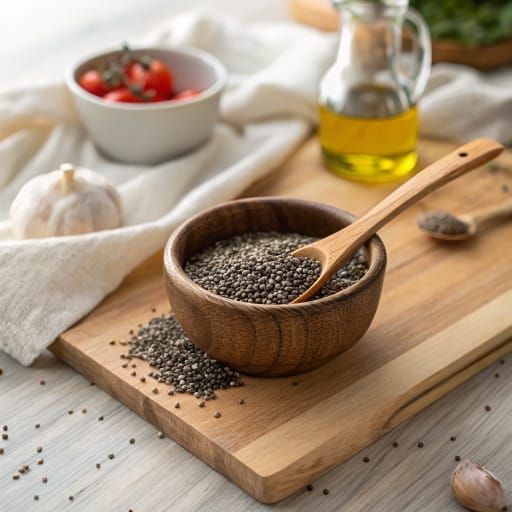
Can Babies Eat Chia Seeds?
Chia seeds are tiny seeds from a plant in the mint family, and their claim to fame is a simple trick: soaked in liquid, they swell into a soft, gel-like texture that's easy for babies to eat and genuinely fun to explore, slightly bumpy, a bit like tapioca.
That gel-forming quality is also nutritionally useful. Chia is one of the best plant sources of omega-3 fats for brain and eye development, plus fiber, protein, calcium, and iron, packed into a single spoonful. Chia isn't a common allergen, so the seed itself carries no particular allergy concern.
The one firm rule: never serve chia dry. Dry seeds absorb liquid and swell considerably, so a spoonful swallowed unsoaked can swell in the mouth or throat instead of a bowl. Soak seeds in liquid for about 30 minutes until they form a gel, then stir into porridge, yogurt, or fruit puree from around 6 months.
Chia Seeds Baby Food: How to Prepare It
Puree from 6+ Months
Soak chia seeds in liquid for about 30 minutes until they form a soft gel, then stir into porridge, yogurt, or a fruit puree. Never offer dry, unsoaked seeds.
BLW from 6+ Months
Stir well-soaked chia seeds into porridge, yogurt, or pudding and serve in a bowl so baby can scoop with hands or a pre-loaded spoon.
BLW from 9+ Months
Continue offering soaked chia seeds mixed into soft, scoopable dishes as baby's self-feeding skills develop.
BLW from 12+ Months
Keep serving soaked seeds in soft, scoopable dishes and let your toddler practice with utensils. Blend soaked seeds into smoothies or mix into warm cereal for variety.
Nutritional Benefits
Chia seeds pack omega-3 fats, fiber, protein, and minerals into a tiny seed, offering strong nutritional value once soaked into a safe, gel-like texture.
Key Nutrients
Omega-3 Fatty Acids
Support healthy brain and eye development.
Fiber
Supports healthy digestion in appropriate, soaked amounts.
Protein
Contributes to muscle and tissue growth.
Calcium
Supports healthy bone development.
Iron
Supports healthy blood and oxygen transport.
Antioxidants
Help protect growing cells from everyday damage.
Allergen & Choking Information
Not a Common Allergen
Chia seeds are not a common allergen, but dry seeds absorb liquid and swell considerably, creating a real choking risk if swallowed unsoaked. Always soak chia seeds in liquid until they form a soft gel, and never spoon-feed dry seeds.
Frequently Asked Questions
When can babies eat Chia Seeds?
Around 6 months (soaked into a soft gel and mixed into other food)
How do I prepare Chia Seeds puree for my baby?
Soak chia seeds in liquid for about 30 minutes until they form a soft gel, then stir into porridge, yogurt, or a fruit puree. Never offer dry, unsoaked seeds.
What are the nutritional benefits of Chia Seeds?
Chia seeds pack omega-3 fats, fiber, protein, and minerals into a tiny seed, offering strong nutritional value once soaked into a safe, gel-like texture.
Sources & Related Resources
Get Personalized Guidance for Every Feeding Stage
Download the Grubsy app to track meals, get tailored recommendations, and explore foods like Chia Seeds plus hundreds more, all in one place.
Disclaimer: This information is for educational purposes only and does not replace professional medical advice.