Cherry for Babies
Baby Food Guide from 6 Months
Puree
6+
Months
BLW
6+
Months
Choking Hazard
Moderate (High if whole or unpitted; always remove the pit and cut or mash appropriately)
Allergen
No
Key Nutrients
Vitamin C • Fiber • Antioxidants (Anthocyanins)
Can Babies Eat Cherry?
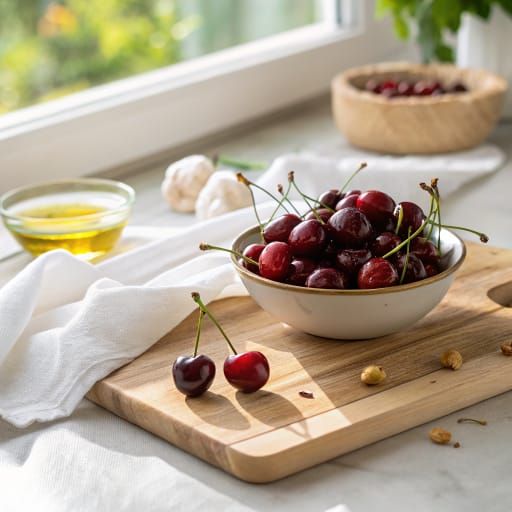
Cherries are a small stone fruit with a bright, sweet-tart flavor that's genuinely exciting for babies who've mostly known milder first foods like banana or pear. Their round shape combined with a hard pit is also why cherries call for more careful handling than most other fruit.
They're a good source of vitamin C and fiber (cherries have a long-standing reputation for easing constipation), plus anthocyanins, the antioxidant pigments behind their deep red color, and a little potassium and vitamin A besides. Cherries are not a common allergen, so preparation is really the whole safety story here.
Removing the pit isn't enough on its own: even pitted, a whole cherry's round, firm shape can still block a young airway. For babies from around 6 months, mince or cook cherries soft; older babies do well with quarters or flattened discs instead. Whole pitted cherries are generally worth saving until closer to age 3.
Cherry Baby Food: How to Prepare It
Puree from 6+ Months
Pit cherries, then blend or finely mince and fold into oatmeal, yogurt, or another soft food. Cooking cherries until completely soft first makes them even easier to manage.
BLW from 6+ Months
Finely mince pitted cherries into soft foods like oatmeal or yogurt, or serve the minced fruit on its own. Cooking until fully soft is another good option for younger babies.
BLW from 9+ Months
Offer pitted cherries cut into quarters, or whole pitted cherries pressed flat into discs, both of which remove the risky round shape.
BLW from 12+ Months
Continue with flattened pitted discs or quarters. There's no need to rush toward whole fruit; softer preparations can continue as long as you like.
Nutritional Benefits
Cherries combine vitamin C, fiber, and anthocyanin antioxidants with a naturally sweet flavor, though their pit and round shape call for careful preparation.
Key Nutrients
Vitamin C
Supports immune function and helps the body absorb iron.
Fiber
Supports healthy, regular digestion.
Antioxidants (Anthocyanins)
Give cherries their deep red color and help protect growing cells.
Potassium
Supports healthy muscle and heart function.
Vitamin A
Supports healthy vision and immune function.
Allergen & Choking Information
Not a Common Allergen
Cherries are not a common allergen, but their hard pit and round, firm shape make whole cherries a serious choking hazard. Always pit cherries and mince, mash, quarter, or flatten them according to your baby's age before serving.
Frequently Asked Questions
When can babies eat Cherries?
Around 6 months (pitted and finely minced or cooked soft)
How do I prepare Cherries puree for my baby?
Pit cherries, then blend or finely mince and fold into oatmeal, yogurt, or another soft food. Cooking cherries until completely soft first makes them even easier to manage.
What are the nutritional benefits of Cherries?
Cherries combine vitamin C, fiber, and anthocyanin antioxidants with a naturally sweet flavor, though their pit and round shape call for careful preparation.
Sources & Related Resources
Get Personalized Guidance for Every Feeding Stage
Download the Grubsy app to track meals, get tailored recommendations, and explore foods like Cherry plus hundreds more, all in one place.
Disclaimer: This information is for educational purposes only and does not replace professional medical advice.