Celery for Babies
Baby Food Guide from 6 Months
Puree
6+
Months
BLW
6+
Months
Choking Hazard
Moderate to High (raw celery is fibrous and a significant risk; low risk once cooked until very soft)
Allergen
No
Key Nutrients
Vitamin K • Antioxidants • Folate
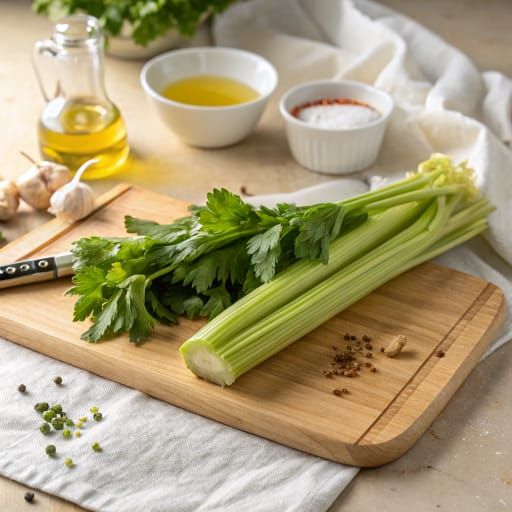
Can Babies Eat Celery?
Celery is best known as a background flavor in soups and stocks, and it takes a little know-how to serve on its own. Its defining feature, long stringy fibers running the length of each stalk, stays tough even after cooking, which is why preparation matters more here than with most vegetables.
Nutritionally it's not a powerhouse, but celery contributes antioxidants, vitamin K, folate, and potassium, and its mild, slightly peppery flavor mellows nicely when simmered with potato, carrot, or apple. A frozen whole stalk also makes a satisfying teether for a baby to gnaw on, softening naturally as they work on it.
Celery isn't a common allergen, but raw stalks are genuinely risky: the fibers don't break down easily when chewed, so a piece can stay intact even after gumming. Cook celery until very soft for babies starting around 6 months, and hold off on raw sticks until closer to age 2.
Celery Baby Food: How to Prepare It
Puree from 6+ Months
Cook celery until very soft, then blend into a smooth vegetable puree or soup. Combine with potato, carrot, or apple to mellow its strong flavor.
BLW from 6+ Months
Offer well-cooked half-moon slices stirred into soft foods. A whole raw stalk can also be given as a teether to gnaw, not eat; freezing it first firms the surface, and it softens naturally as baby works on it.
BLW from 9+ Months
Serve cooked half-moon slices as finger food or mixed into soft dishes. A whole raw stalk can still be offered as a teether.
BLW from 12+ Months
Offer raw celery only as very thin slivers cut into half-moons. Avoid larger chunks, which stay too firm to chew safely at this age.
Nutritional Benefits
Celery offers antioxidants, vitamin K, and folate in a low-calorie vegetable that works best as a flavorful addition to purees, soups, and soft dishes.
Key Nutrients
Vitamin K
Supports healthy blood clotting and bone development.
Antioxidants
Help protect developing cells from everyday damage.
Folate
Supports healthy cell growth during rapid development.
Potassium
Supports healthy muscle and heart function.
Fiber
Contributes to healthy digestion.
Allergen & Choking Information
Not a Common Allergen
Celery is not one of the major allergens, but raw stalks are firm and stringy enough to pose a significant choking risk. Always cook celery until very soft for young babies, and wait until around 2 years, with reliable chewing, before offering raw sticks.
Frequently Asked Questions
When can babies eat Celery?
Around 6 months (cooked until very soft)
How do I prepare Celery puree for my baby?
Cook celery until very soft, then blend into a smooth vegetable puree or soup. Combine with potato, carrot, or apple to mellow its strong flavor.
What are the nutritional benefits of Celery?
Celery offers antioxidants, vitamin K, and folate in a low-calorie vegetable that works best as a flavorful addition to purees, soups, and soft dishes.
Sources & Related Resources
Get Personalized Guidance for Every Feeding Stage
Download the Grubsy app to track meals, get tailored recommendations, and explore foods like Celery plus hundreds more, all in one place.
Disclaimer: This information is for educational purposes only and does not replace professional medical advice.