Cashew for Babies
Baby Food Guide from 6 Months
Puree
6+
Months
BLW
6+
Months
Choking Hazard
High (whole or chopped cashews; low risk only when served as smooth thinned butter or fine powder)
Allergen
Yes
Key Nutrients
Healthy Fats • Protein • Iron
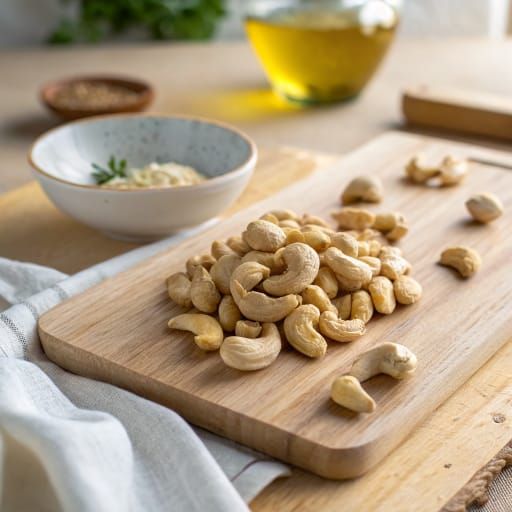
Can Babies Eat Cashew?
Cashews are a creamy, mildly sweet tree nut, and one detail surprises most parents: the "raw" cashews sold in stores are never actually raw. They're steamed first to remove a naturally toxic layer, though that has no bearing on how they need to be prepared for a baby, always smooth and thin, never whole or chopped.
They're calorie-dense and rich in healthy fats, protein, iron, and zinc, useful nutrition in the small volumes a baby's stomach can hold. Cashews are also a tree nut, one of the nine major allergens, so introducing them early in a safe, diluted form is one of the more effective ways to lower a baby's risk of developing a nut allergy.
From around 6 months, offer only smooth cashew butter thinned with water, breast milk, or formula. Whole cashews, pieces, and thick globs of butter are serious choking hazards and should wait until about age 2, and even then only as halves once chewing is confident.
Cashew Baby Food: How to Prepare It
Puree from 6+ Months
Thin smooth cashew butter with applesauce, breast milk, formula, or water until runny and drippy. Stir a small amount into a fruit or vegetable puree baby already eats, and watch for reaction.
BLW from 6+ Months
Mix thinned cashew butter into applesauce, oatmeal, or yogurt, or spread a very thin layer on soft toast. Ground cashew powder sprinkled over soft fruit or vegetables also works well.
BLW from 9+ Months
Continue offering thinned cashew butter mixed into meals, and keep sprinkling finely ground cashew over soft foods. Avoid any thick globs, chunks, or pieces.
BLW from 12+ Months
Stir cashew butter into yogurt, cereal, or mashed vegetables, and offer unsweetened cashew milk as an occasional drink. Whole or chopped cashews still need to wait until around age 2 and confident chewing.
Nutritional Benefits
Cashews deliver concentrated healthy fats, plant protein, and iron in a small volume, making them a nutrient-dense addition once served in a safe, diluted form.
Key Nutrients
Healthy Fats
Provide concentrated energy and support brain development.
Protein
Supports muscle and tissue growth.
Iron
Helps replenish iron stores that begin to decline around 6 months.
Magnesium
Supports healthy muscle and nerve function.
Zinc
Plays a role in immune health and normal growth.
Allergen & Choking Information
Common Allergen
Cashews are a tree nut, one of the nine major allergens. Introduce as smooth, well-thinned cashew butter or fine powder under supervision. Whole or chopped cashews are a serious choking hazard and should be avoided until around age 2, and only as halves once chewing is confident.
Frequently Asked Questions
When can babies eat Cashews?
Around 6 months (as smooth, thinned cashew butter or finely ground)
How do I prepare Cashews puree for my baby?
Thin smooth cashew butter with applesauce, breast milk, formula, or water until runny and drippy. Stir a small amount into a fruit or vegetable puree baby already eats, and watch for reaction.
What are the nutritional benefits of Cashews?
Cashews deliver concentrated healthy fats, plant protein, and iron in a small volume, making them a nutrient-dense addition once served in a safe, diluted form.
Sources & Related Resources
Get Personalized Guidance for Every Feeding Stage
Download the Grubsy app to track meals, get tailored recommendations, and explore foods like Cashew plus hundreds more, all in one place.
Disclaimer: This information is for educational purposes only and does not replace professional medical advice.