Cabbage for Babies
Baby Food Guide from 6 Months
Puree
6+
Months
BLW
6+
Months
Choking Hazard
Moderate (raw cabbage is firm and fibrous; always cook soft or shred finely for young babies)
Allergen
No
Key Nutrients
Vitamin C • Fiber • Vitamin K
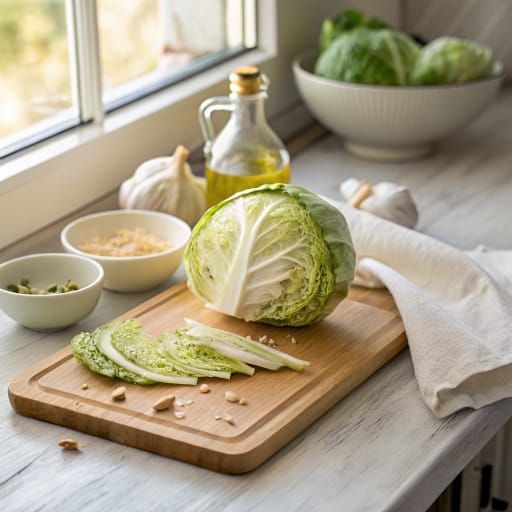
Can Babies Eat Cabbage?
Cabbage is a hardy, layered vegetable in the same family as broccoli and kale, and it's a surprisingly practical first vegetable once you know how to prepare it. Raw, it's thick and fibrous, but cooked until soft it turns mild and slightly sweet, which is why cooking method matters here more than almost anything else.
It's a strong source of vitamin C, which helps a baby absorb iron from other foods in the same meal, plus fiber, vitamin K, and folate. It's also cheap, keeps for weeks in the fridge, and its mild flavor once cooked means it blends easily into rice, mashed potato, or scrambled eggs without needing a recipe of its own.
Cabbage isn't a common allergen, but raw pieces are firm enough to be a real choking risk, so cook it soft or shred it very finely for young babies rather than offering raw wedges. One quirk worth knowing: red cabbage can temporarily tint stool or urine, which is completely harmless.
Cabbage Baby Food: How to Prepare It
Puree from 6+ Months
Cook cabbage until very soft, then blend until smooth with a little cooking water, breast milk, or formula. Mixes well with milder vegetables like potato or carrot.
BLW from 6+ Months
Stir finely grated or minced cooked cabbage into scoopable foods like porridge or mashed potato. A single sturdy raw rib, about the size of an adult finger, can be offered for gnawing and exploring under close supervision.
BLW from 9+ Months
Offer thin shreds of cooked or raw cabbage for self-feeding practice. It's normal for baby to spit out raw shreds rather than swallow them while chewing skills are still developing.
BLW from 12+ Months
Serve chopped or shredded cooked cabbage, or whole soft cooked leaves. Raw cabbage still works best shredded or chopped very finely rather than in larger pieces.
Nutritional Benefits
Cabbage delivers vitamin C, fiber, and antioxidants in a mild, easy-to-prepare vegetable that fits neatly into purees, grains, and mashed dishes.
Key Nutrients
Vitamin C
Strengthens the immune system and boosts iron absorption from other foods.
Fiber
Supports smooth digestion as babies move onto more solid foods.
Vitamin K
Supports healthy blood clotting and bone development.
Antioxidants
Help protect fast-growing cells from everyday damage.
Folate
Supports healthy cell growth during a stage of rapid development.
Allergen & Choking Information
Not a Common Allergen
Cabbage is not a common allergen, but raw pieces are thick and fibrous enough to pose a real choking risk. Always cook until very soft, or finely shred or mince raw cabbage, rather than offering thick raw wedges to young babies.
Frequently Asked Questions
When can babies eat Cabbage?
Around 6 months (cooked until very soft, or finely grated)
How do I prepare Cabbage puree for my baby?
Cook cabbage until very soft, then blend until smooth with a little cooking water, breast milk, or formula. Mixes well with milder vegetables like potato or carrot.
What are the nutritional benefits of Cabbage?
Cabbage delivers vitamin C, fiber, and antioxidants in a mild, easy-to-prepare vegetable that fits neatly into purees, grains, and mashed dishes.
Sources & Related Resources
Get Personalized Guidance for Every Feeding Stage
Download the Grubsy app to track meals, get tailored recommendations, and explore foods like Cabbage plus hundreds more, all in one place.
Disclaimer: This information is for educational purposes only and does not replace professional medical advice.