Buckwheat for Babies
Baby Food Guide from 6 Months
Puree
6+
Months
BLW
6+
Months
Choking Hazard
Low (when cooked soft and mashed or cut appropriately)
Allergen
No
Key Nutrients
Protein • Fiber • Manganese
Can Babies Eat Buckwheat?
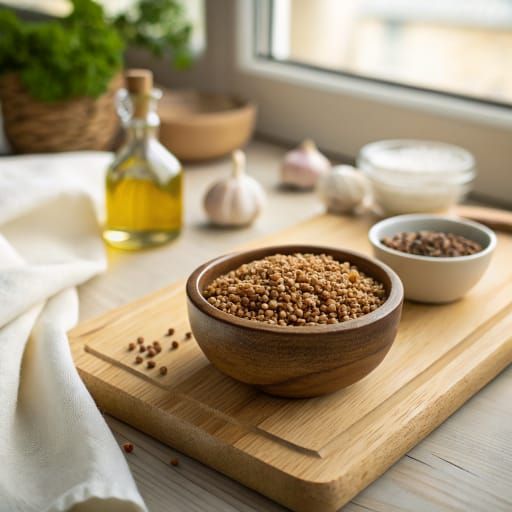
Buckwheat is a small, triangular seed, not a true grain, and despite the name it has no relation to wheat and contains no gluten at all. That makes it a handy option for families avoiding gluten, or simply looking to add variety to a rotation of rice and oats.
It's also one of the few plant foods with a complete protein profile, carrying all nine essential amino acids babies need for growth, plus fiber, manganese, and magnesium. Cooked into porridge, buckwheat has a warm, earthy, slightly nutty flavor, and its natural mild bitterness fades once it's simmered with fruit, vegetables, or a little cinnamon.
Buckwheat isn't a major allergen, so the real consideration is texture: groats need to be cooked soft and mashed or blended for young babies, since loose grains can scatter and trigger gagging. As chewing improves, soba noodles and soft buckwheat pancakes make good next steps toward more grown-up textures.
Buckwheat Baby Food: How to Prepare It
Puree from 6+ Months
Cook buckwheat groats until very tender, then blend or mash with water, breast milk, or formula into a smooth, spoonable porridge. Stir in mild fruit or vegetable puree for flavor.
BLW from 6+ Months
Offer soft buckwheat porridge mixed with fruit, vegetables, or gentle spices. Soft buckwheat pancakes or bread, and soba noodles chopped into short, manageable pieces, also work well.
BLW from 9+ Months
Cut pancakes into strips and serve porridge in bite-sized, scoopable portions. Mix cooked buckwheat into soft meatballs, or roll slippery finger foods in cooked groats or flakes for extra grip.
BLW from 12+ Months
Continue earlier preparations and offer whole soba noodles as finger food, or with a pre-loaded fork or spoon for utensil practice.
Nutritional Benefits
Buckwheat offers a rare complete plant protein along with fiber, manganese, and antioxidants, all while staying naturally free of gluten and the major allergens.
Key Nutrients
Protein
Provides a rare complete plant protein with all essential amino acids for growth.
Fiber
Supports healthy digestion as baby's gut adjusts to solid foods.
Manganese
Contributes to healthy bone development and energy metabolism.
Magnesium
Supports nerve function, muscles, and steady energy release.
Antioxidants (Rutin)
Helps protect growing cells from everyday oxidative stress.
Allergen & Choking Information
Not a Common Allergen
Buckwheat is not one of the major allergens and, despite its name, contains no gluten. The main consideration is texture: cook groats until fully tender and mash or blend them so loose grains don't scatter and trigger gagging in young babies.
Frequently Asked Questions
When can babies eat Buckwheat?
Around 6 months (as a smooth, well-mashed porridge)
How do I prepare Buckwheat puree for my baby?
Cook buckwheat groats until very tender, then blend or mash with water, breast milk, or formula into a smooth, spoonable porridge. Stir in mild fruit or vegetable puree for flavor.
What are the nutritional benefits of Buckwheat?
Buckwheat offers a rare complete plant protein along with fiber, manganese, and antioxidants, all while staying naturally free of gluten and the major allergens.
Sources & Related Resources
Get Personalized Guidance for Every Feeding Stage
Download the Grubsy app to track meals, get tailored recommendations, and explore foods like Buckwheat plus hundreds more, all in one place.
Disclaimer: This information is for educational purposes only and does not replace professional medical advice.