Bok Choy for Babies
Baby Food Guide from 6 Months
Puree
6+
Months
BLW
6+
Months
Choking Hazard
Moderate (Low once thoroughly cooked soft)
Allergen
No
Key Nutrients
Vitamin A • Vitamin C • Calcium
Can Babies Eat Bok Choy?
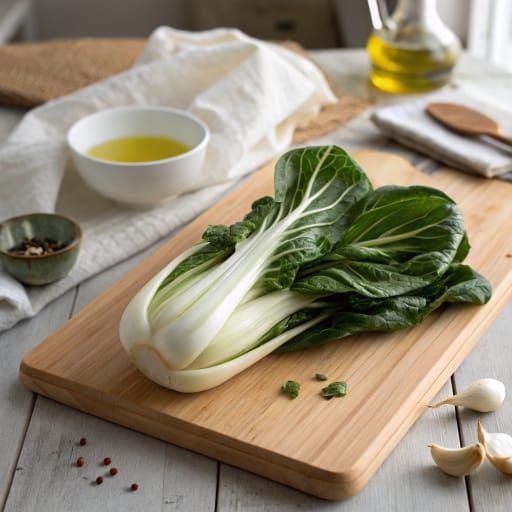
Bok choy is a mild, faintly sweet Chinese cabbage with crisp stalks and tender dark green leaves that cook very differently from each other. The leaves turn soft almost immediately, while the stalk needs real cooking time to lose its characteristic crunch, similar to raw celery. Understanding that difference is really the whole story with this vegetable.
It belongs to the same cruciferous family as broccoli and kale, and packs in fiber, vitamin A, vitamin C, folate, and a genuinely useful amount of plant-based calcium. Bok choy isn't a common allergen. The raw stalk is firm enough to be a choking risk, so it always needs to be cooked until soft before it reaches a baby, whether pureed or offered as a whole rib.
Smaller "baby bok choy" is simply a younger plant with a more tender stalk that cooks through faster, which can be a handy shortcut on a busy evening.
Bok Choy Baby Food: How to Prepare It
Puree from 6+ Months
Cook bok choy until very tender, then finely mince the leaves and stalk. Stir into a soft base such as porridge or mashed vegetables so it's easy to eat from a spoon.
BLW from 6+ Months
Offer whole cooked bok choy ribs, the pale lower part of the stalk with the leaves removed, cooked until soft. Or finely chop the whole vegetable and stir it into soft foods like porridge or mashed vegetables.
BLW from 9+ Months
As the pincer grasp develops, offer soft cooked bok choy in small chopped pieces or thin ribbons of both leaf and stalk, or continue folding finely chopped bok choy into soft dishes.
BLW from 12+ Months
Serve cooked bok choy however suits the meal: torn into ribbons, chopped small, or left in larger pieces so baby can practice biting through and pulling food apart.
Nutritional Benefits
Bok choy packs vitamin A, vitamin C, calcium, and folate into a mild, easy to like leafy vegetable that supports bones, immunity, and healthy growth.
Key Nutrients
Vitamin A
Supports eye development and immune function.
Vitamin C
Supports immunity and helps the body absorb iron.
Calcium
Supports developing bones and teeth.
Folate
Supports healthy cell growth during rapid development.
Fiber
Supports healthy digestion.
Allergen & Choking Information
Not a Common Allergen
Bok choy is not a common allergen. The raw stalk is firm and fibrous, so it should always be cooked until soft before serving, whether pureed or offered as a whole rib.
Frequently Asked Questions
When can babies eat Bok Choy?
Around 6 months (finely minced or as soft cooked ribs)
How do I prepare Bok Choy puree for my baby?
Cook bok choy until very tender, then finely mince the leaves and stalk. Stir into a soft base such as porridge or mashed vegetables so it's easy to eat from a spoon.
What are the nutritional benefits of Bok Choy?
Bok choy packs vitamin A, vitamin C, calcium, and folate into a mild, easy to like leafy vegetable that supports bones, immunity, and healthy growth.
Sources & Related Resources
Get Personalized Guidance for Every Feeding Stage
Download the Grubsy app to track meals, get tailored recommendations, and explore foods like Bok Choy plus hundreds more, all in one place.
Disclaimer: This information is for educational purposes only and does not replace professional medical advice.