Berries for Babies
Baby Food Guide from 6 Months
Puree
6+
Months
BLW
6+
Months
Choking Hazard
High
Allergen
No
Key Nutrients
Vitamin C • Antioxidants • Fiber
Can Babies Eat Berries?
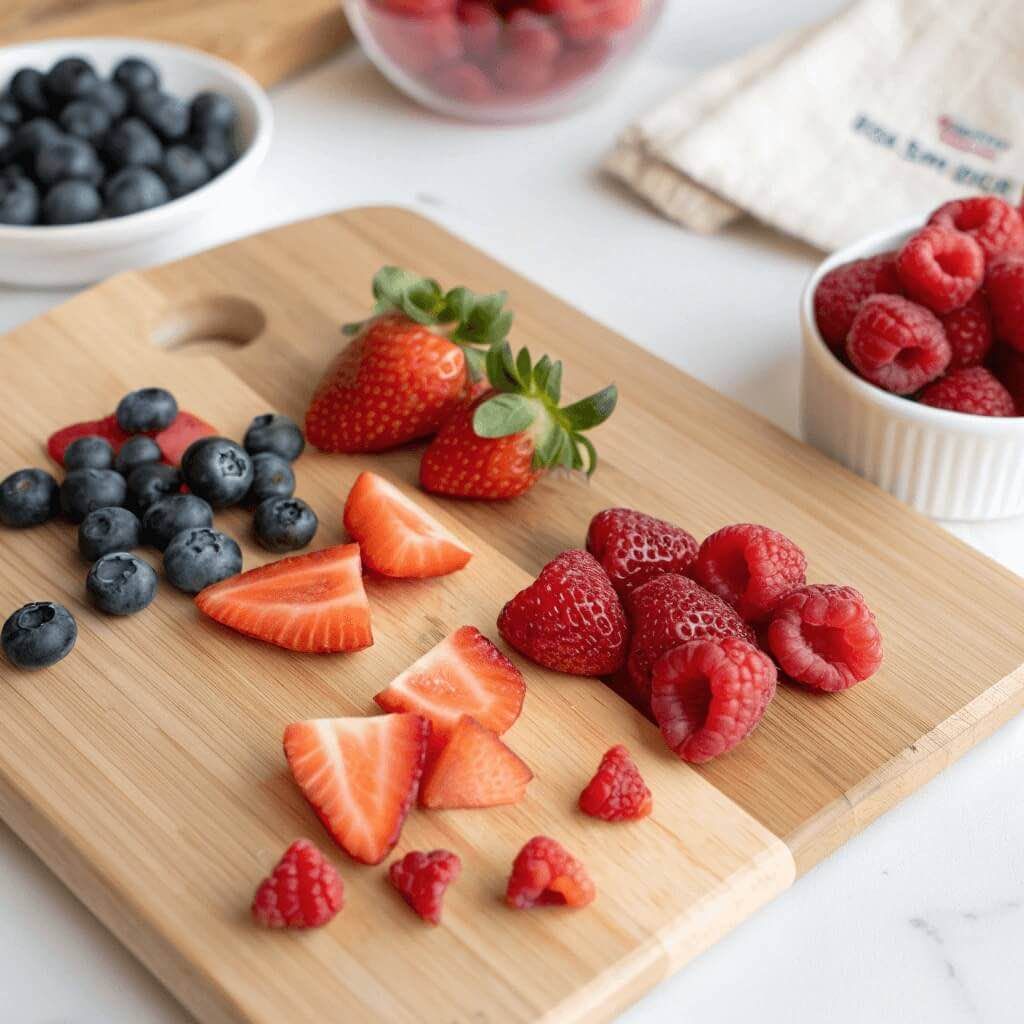
Raspberries, blackberries, and strawberries rank among the most antioxidant-rich fruits a baby can eat, and their sweet-tart flavor is a useful step beyond the straightforward sweetness of banana or apple. Each type brings something different too: raspberries and blackberries have a bumpy, textured surface, while ripe strawberries are smooth and juicy.
Berries are a good source of vitamin C, folate, and fiber, and that vitamin C also helps a baby's body absorb iron from other foods in the same meal. Some research even links regular berry intake to benefits for memory and motor skill development. Their small size makes them a natural fit for practicing a pincer grasp once babies are ready for finger foods, around 9 months. That same small size is exactly the problem earlier on, since whole berries are a genuine choking hazard for younger babies.
Berries aren't a common allergen. Mashing, quartering, or cooking them is what makes them safe before that finger-food stage, and frozen berries work just as well as fresh.
Berries Baby Food: How to Prepare It
Puree from 6+ Months
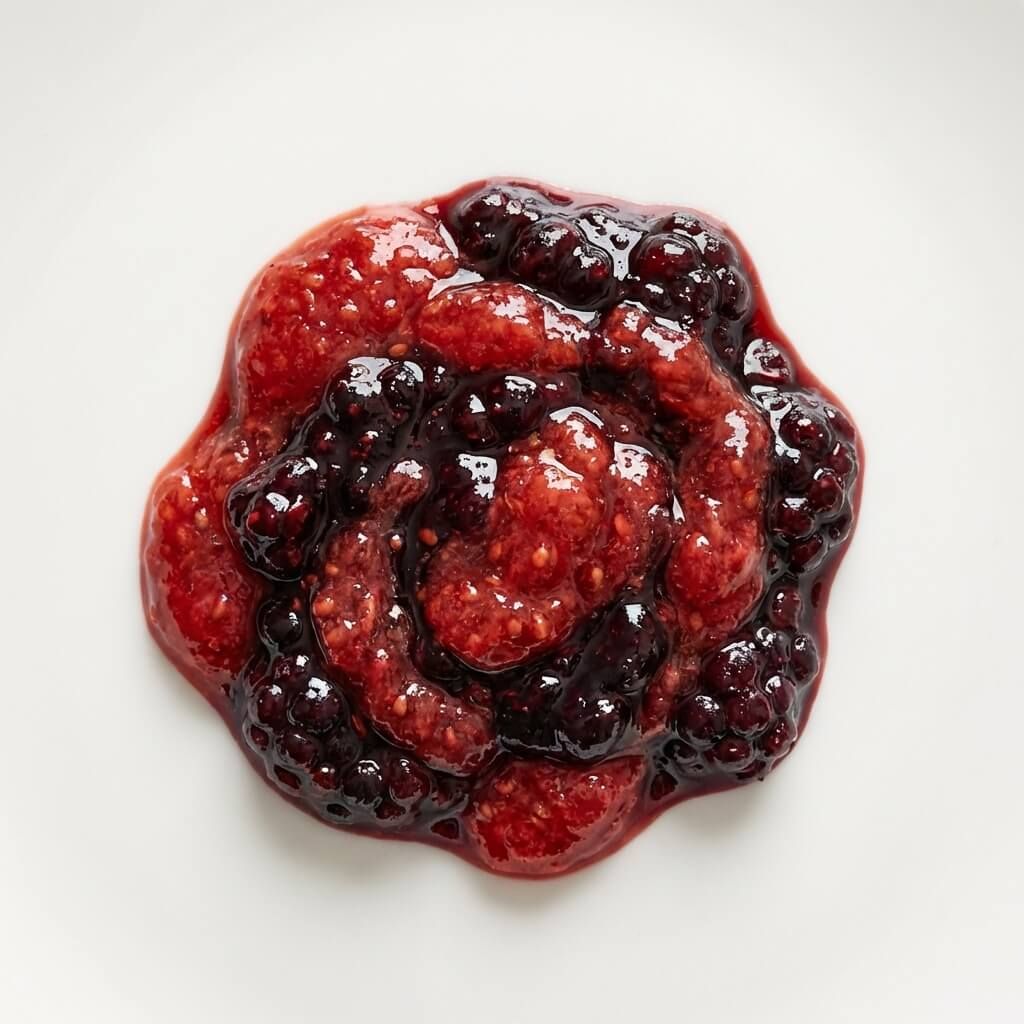
Cook fresh or frozen berries until soft, then puree until smooth. Can mix with other fruits or cereals for variety.
BLW from 6+ Months
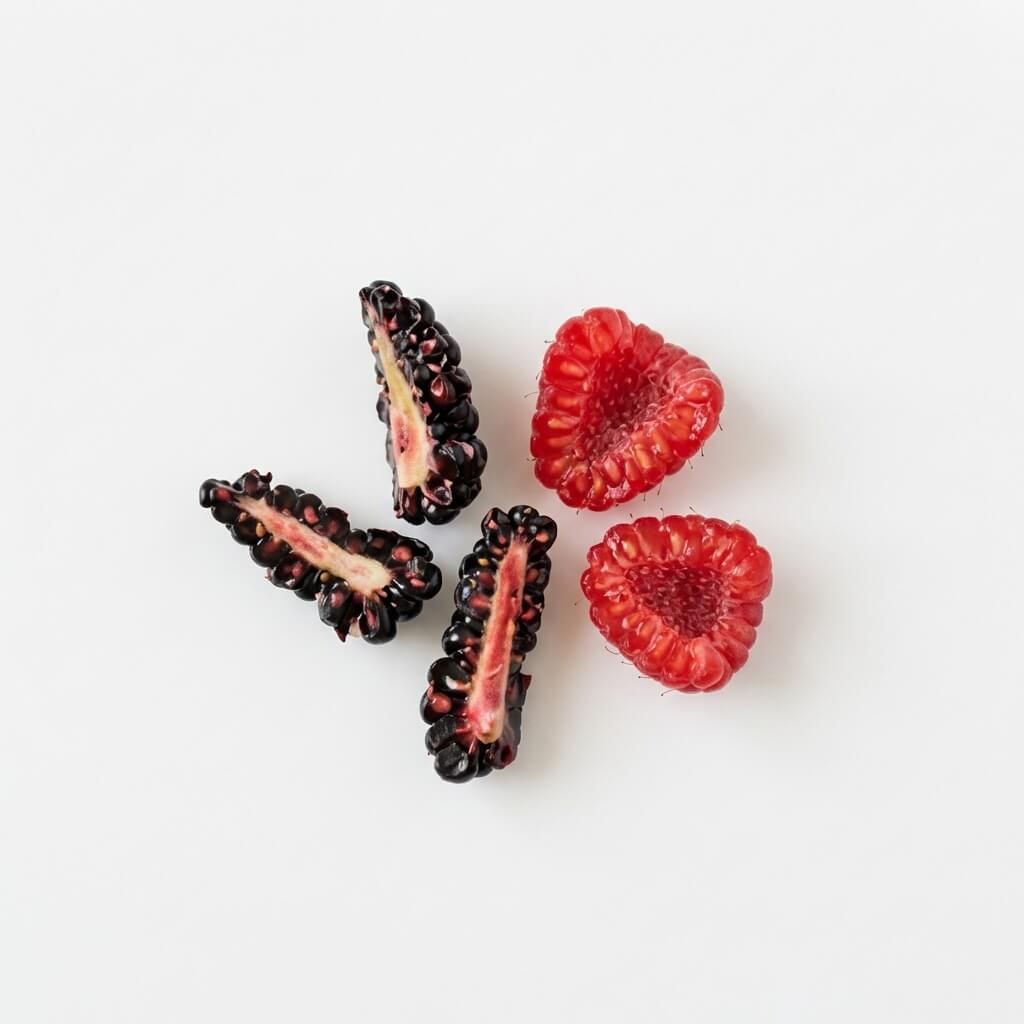
Cook berries until soft or mash fresh ones thoroughly. Flatten larger berries to prevent choking.
BLW from 9+ Months
Small pieces of soft berries like quartered blueberries are perfect for practicing that pincer grasp.
BLW from 12+ Months
Whole small berries or cut larger ones. Great for self-feeding and color recognition.
Nutritional Benefits
Berries are packed with vitamins, fiber, and powerful antioxidants that strengthen immunity, support brain development, and protect cells. Vibrant colors encourage food exploration and acceptance.
Key Nutrients
Vitamin C
Strengthens the immune system and enhances iron absorption.
Antioxidants
Protect cells and support brain health.
Fiber
Aids digestion and bowel regularity.
Folate
Supports healthy cell growth.
Potassium
Helps regulate fluid balance and muscle activity.
Allergen & Choking Information
Not a Common Allergen
Berries are not common allergens, but whole berries pose serious choking hazards for babies under 12 months. Always mash, quarter, or cook berries before serving to ensure safety.
Frequently Asked Questions
When can babies eat Berries?
Around 6 months (cooked or mashed)
How do I prepare Berries puree for my baby?
Cook fresh or frozen berries until soft, then puree until smooth. Can mix with other fruits or cereals for variety.
What are the nutritional benefits of Berries?
Berries are packed with vitamins, fiber, and powerful antioxidants that strengthen immunity, support brain development, and protect cells. Vibrant colors encourage food exploration and acceptance.
Sources & Related Resources
Get Personalized Guidance for Every Feeding Stage
Download the Grubsy app to track meals, get tailored recommendations, and explore foods like Berries plus hundreds more, all in one place.
Disclaimer: This information is for educational purposes only and does not replace professional medical advice.