Basil for Babies
Baby Food Guide from 6 Months
Puree
6+
Months
BLW
6+
Months
Choking Hazard
Low
Allergen
No
Key Nutrients
Vitamin K • Vitamin A (Beta-Carotene) • Manganese
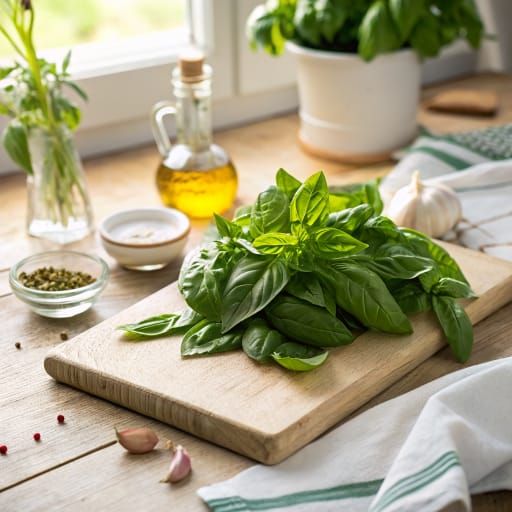
Can Babies Eat Basil?
Basil usually reaches a baby's plate as a flavor rather than a food in its own right, a pinch of chopped leaf stirred into a puree or sauce. That fits, since its peppery, sweet aroma is strong even in tiny amounts, letting a baby taste something genuinely complex without needing to eat much of the herb itself. Weight for weight the leaf is surprisingly nutrient dense too, concentrated in vitamin K, beta-carotene, manganese, and antioxidant plant compounds.
Basil isn't a common allergen, and finely chopped into other food it carries very little choking risk. The main thing to expect is textural surprise: the leaf's slightly fibrous, velvety surface strikes many babies as odd at first, so spitting or grimacing during those early tries is completely normal and nothing to worry about.
Introducing herbs and more complex flavors early is one of the simpler ways to help a baby grow into a more adventurous eater later on. Sweet basil is the most common variety, but Thai basil and lemon basil work the same way in small chopped amounts, and basil folds easily into pasta, purees, or a spoonful of pesto.
Basil Baby Food: How to Prepare It
Puree from 6+ Months
Blend a small amount of fresh basil, minced fine, or a pinch of crumbled dried basil into smooth purees, mashes, or sauces such as pesto for a gentle lift of flavor.
BLW from 6+ Months
Treat basil as a seasoning at this stage: fold a little finely chopped fresh basil or crumbled dried basil into soft, mashable dishes, sauces, or easy to grab finger foods, or stir it into a sauce like pesto.
BLW from 9+ Months
Shred fresh basil into fine slivers or tiny flecks and stir it through meals, served raw or lightly cooked. A good deal of spitting is normal while baby gets used to the texture.
BLW from 12+ Months
Continue shredding fresh basil into meals, gradually using slightly larger pieces as chewing skills improve and baby gets more comfortable with the texture.
Nutritional Benefits
Used in small amounts, basil contributes concentrated vitamin K and antioxidants while introducing babies to complex herbal flavors early on.
Key Nutrients
Vitamin K
Supports healthy blood clotting and bone development.
Vitamin A (Beta-Carotene)
Supports eye health and immune function.
Manganese
Supports metabolism and bone growth.
Antioxidants (Eugenol & Flavonoids)
Help protect cells from everyday oxidative stress.
Allergen & Choking Information
Not a Common Allergen
Basil is not a common allergen and poses very little choking risk when finely chopped into other foods. Some spitting or grimacing is normal as baby adjusts to its distinct, slightly peppery flavor.
Frequently Asked Questions
When can babies eat Basil?
Around 6 months (finely chopped into purees or soft foods)
How do I prepare Basil puree for my baby?
Blend a small amount of fresh basil, minced fine, or a pinch of crumbled dried basil into smooth purees, mashes, or sauces such as pesto for a gentle lift of flavor.
What are the nutritional benefits of Basil?
Used in small amounts, basil contributes concentrated vitamin K and antioxidants while introducing babies to complex herbal flavors early on.
Sources & Related Resources
Get Personalized Guidance for Every Feeding Stage
Download the Grubsy app to track meals, get tailored recommendations, and explore foods like Basil plus hundreds more, all in one place.
Disclaimer: This information is for educational purposes only and does not replace professional medical advice.