Barley for Babies
Baby Food Guide from 6 Months
Puree
6+
Months
BLW
6+
Months
Choking Hazard
Low
Allergen
Yes
Key Nutrients
Fiber (Beta-Glucan) • B Vitamins • Selenium
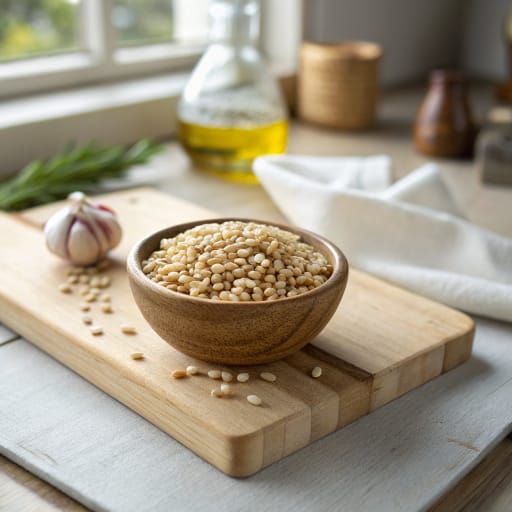
Can Babies Eat Barley?
Barley is a hearty whole grain with a mild, nutty flavor, most familiar from soups and stews but just as good as a warm breakfast porridge. It's one of the oldest cultivated grains in human history. Cooked low and slow with plenty of liquid, the grains soften into something a baby can gum safely well before a full set of teeth arrives. It brings real nutrition too: fiber, including gut-friendly beta-glucan, B vitamins, selenium, manganese, and plant-based iron.
Like wheat and oats, barley is a gluten grain, so it should be introduced the way other gluten-containing grains are: gradually, and with attention to how baby responds, especially if celiac disease or gluten sensitivity runs in the family. Soaking the grains beforehand also makes the nutrients a little easier to absorb.
Pearled barley cooks fastest and makes the smoothest early porridge, hulled barley keeps more bran and fiber for later once chewing is more confident, and barley flakes work much like rolled oats. Once a baby is eating more independently, barley also turns up well in soft pancakes, bread, or stirred into a family stew.
Barley Baby Food: How to Prepare It
Puree from 6+ Months
Simmer barley flakes or pearled barley until very soft, cooking into a smooth porridge with water, breast milk, or formula. Soaking the grains beforehand makes the nutrients easier to absorb.
BLW from 6+ Months
Offer barley porridge for self feeding, mix barley flakes into pancakes or bread, or serve crisp toasted barley bread strips about two adult fingers wide. Let baby feed themselves rather than spoon feeding.
BLW from 9+ Months
Continue porridge, pancakes, and breads, or mix cooked barley into meatballs cut into bite sized pieces. Flattening cooked grains with a fork also helps with pincer grasp practice.
BLW from 12+ Months
Serve barley in porridge, breads, and pancakes, as well as curries, soups, and stews shared straight from the family table.
Nutritional Benefits
Barley is a fiber rich whole grain that supplies B vitamins, minerals, and steady energy, though its natural gluten content is worth knowing for families managing celiac disease or gluten sensitivity.
Key Nutrients
Fiber (Beta-Glucan)
Supports digestion and helps baby feel satisfied after meals.
B Vitamins
Support energy metabolism and nervous system development.
Selenium
Supports healthy immune function.
Manganese
Contributes to healthy bone development.
Iron
Supports healthy blood development, though less easily absorbed than iron from meat.
Allergen & Choking Information
Common Allergen
Barley contains gluten, a known allergen, so it is not suitable for babies with celiac disease or a diagnosed gluten sensitivity. Introduce it gradually and watch for reactions like digestive upset, skin rashes, or unusual fussiness. Always cook grains until soft.
Frequently Asked Questions
When can babies eat Barley?
Around 6 months (as a smooth porridge)
How do I prepare Barley puree for my baby?
Simmer barley flakes or pearled barley until very soft, cooking into a smooth porridge with water, breast milk, or formula. Soaking the grains beforehand makes the nutrients easier to absorb.
What are the nutritional benefits of Barley?
Barley is a fiber rich whole grain that supplies B vitamins, minerals, and steady energy, though its natural gluten content is worth knowing for families managing celiac disease or gluten sensitivity.
Sources & Related Resources
Get Personalized Guidance for Every Feeding Stage
Download the Grubsy app to track meals, get tailored recommendations, and explore foods like Barley plus hundreds more, all in one place.
Disclaimer: This information is for educational purposes only and does not replace professional medical advice.