Artichoke for Babies
Baby Food Guide from 6 Months
Puree
6+
Months
BLW
6+
Months
Choking Hazard
Moderate (Low once the choke and tough petals are removed and the heart is cooked soft)
Allergen
No
Key Nutrients
Fiber • Folate • Vitamin C
Can Babies Eat Artichoke?
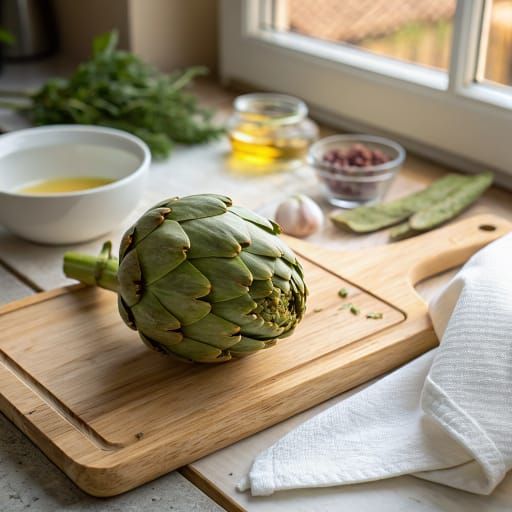
Artichoke is an unusual first food, mostly because so few adults know how to prepare one. What a baby actually eats is the heart, the tender base hidden under the tough outer petals and the fuzzy, inedible choke. Once those parts are removed and the heart is cooked fully tender, what's left is a mild, slightly nutty vegetable most babies accept easily.
It's one of the more fiber dense vegetables a baby will encounter, and it also supplies folate, vitamin C, and magnesium, plus a prebiotic fiber called inulin that feeds beneficial gut bacteria. Artichoke isn't a common allergen. The real safety issue is preparation: the outer petals are too fibrous to offer safely, and the heart needs to be cooked until a fork slides through with no resistance.
Canned or frozen artichoke hearts are a practical shortcut on busy days and cook much faster than a whole fresh artichoke, which can take twenty to forty minutes to soften.
Artichoke Baby Food: How to Prepare It
Puree from 6+ Months
Use a well cooked or canned artichoke heart. Pull off the tough outer petals, scoop out the fuzzy centre, then mash or finely chop the heart and fold it into a soft food like mashed avocado or yogurt.
BLW from 6+ Months
Cook a large artichoke heart until completely soft, remove the tough outer petals and fuzzy choke, and offer it whole or halved. Leaving the stem attached gives baby a natural handle to hold.
BLW from 9+ Months
Keep offering thoroughly cooked, soft hearts whole or halved for gnawing practice, and start adding bite sized pieces or thin slices as the pincer grasp develops.
BLW from 12+ Months
Cut a soft, fully cooked artichoke heart into quarters or small bite sized pieces. The tender inner petals can now be left attached too.
Nutritional Benefits
Artichoke hearts are unusually rich in fiber and provide folate, vitamin C, and magnesium that support digestion and healthy early development.
Key Nutrients
Fiber
Supports healthy digestion and regular, comfortable bowel movements.
Folate
Supports healthy cell growth and brain development.
Vitamin C
Supports immune function.
Magnesium
Supports muscle function, nerve signaling, and bone development.
Prebiotic Fiber (Inulin)
Feeds beneficial bacteria in a developing gut microbiome.
Allergen & Choking Information
Not a Common Allergen
Artichoke is not a common allergen. The tough outer petals and fuzzy choke must always be removed, and the heart needs to be cooked until completely soft to avoid a choking risk.
Frequently Asked Questions
When can babies eat Artichokes?
Around 6 months (as a soft mash or whole cooked heart)
How do I prepare Artichokes puree for my baby?
Use a well cooked or canned artichoke heart. Pull off the tough outer petals, scoop out the fuzzy centre, then mash or finely chop the heart and fold it into a soft food like mashed avocado or yogurt.
What are the nutritional benefits of Artichokes?
Artichoke hearts are unusually rich in fiber and provide folate, vitamin C, and magnesium that support digestion and healthy early development.
Sources & Related Resources
Get Personalized Guidance for Every Feeding Stage
Download the Grubsy app to track meals, get tailored recommendations, and explore foods like Artichoke plus hundreds more, all in one place.
Disclaimer: This information is for educational purposes only and does not replace professional medical advice.